
Google’s Android XR smart glasses could offer a compelling alternative to Meta’s Ray-Ban eyewear, with their straightforward companion app emerging as a key advantage. Early hands-on impressions suggest that seamless smartphone integration and simple controls may prove just as important as the hardware itself.
Android XR Glasses Stand Out for Their Software Experience
Google’s Intelligent Eyewear, powered by Android XR, is being developed to deliver a more integrated smart glasses experience. While the devices themselves remain an important part of the offering, their companion application could be a deciding factor for users considering alternatives to Meta Ray-Bans.
Following an initial hands-on demonstration, technology journalist Ben Schoon highlighted the simplicity of Google’s software as one of the most appealing aspects of the upcoming eyewear.
Rather than relying entirely on new hardware features, Google appears to be focusing on making its smart glasses easier to manage through familiar smartphone interfaces.
Native Smartphone Integration Offers an Advantage
One of the main benefits of Android XR glasses is their potential for closer integration with existing mobile operating systems.
This approach is already familiar in the smartwatch market, where devices designed to work closely with a particular smartphone ecosystem often provide a more convenient experience.
Google’s Android XR platform aims to bring similar benefits to smart eyewear, reducing the complexity of connecting devices, adjusting settings and accessing supported features.
For consumers in the UK and elsewhere, compatibility and ease of use could become important considerations as smart glasses move towards wider adoption.
Google’s Glasses App Focuses on Simplicity
A central feature of the Android XR experience is the dedicated Glasses app, which has been demonstrated on Android, Google Pixel, Samsung Galaxy and iOS devices.
Early impressions indicate that the application prioritises essential controls rather than unnecessary features or complicated menus.
Although the version available during the demonstration was not final, its interface offered a clear indication of Google’s intended approach.
Battery Status, Gemini and Camera Controls in One Place
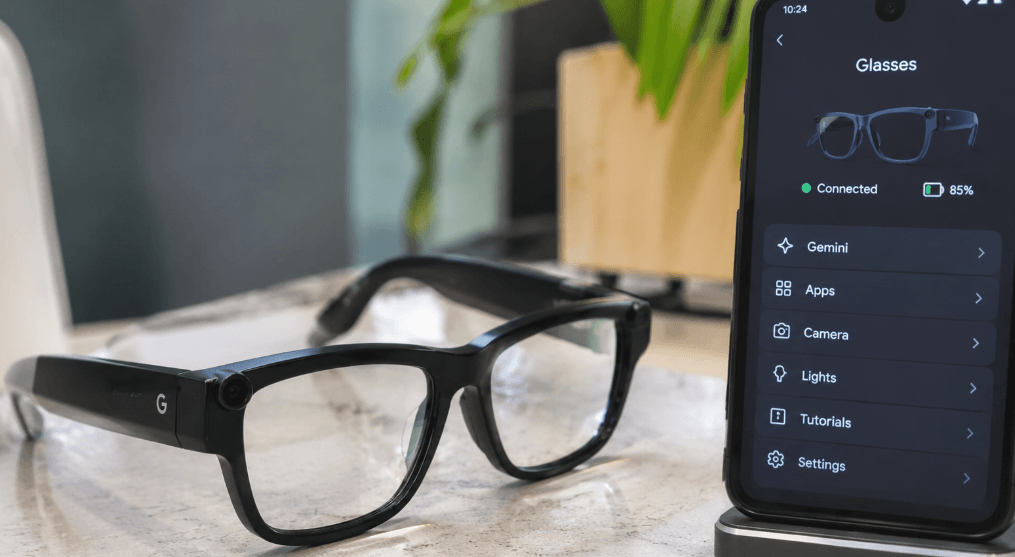
The Glasses app opens with an overview of the connected eyewear, providing immediate access to important device information.
Users can check the connection status and remaining battery charge without navigating through multiple screens.
Additional settings provide access to several key functions, including:
-
Google Gemini artificial intelligence features.
-
Supported applications and their settings.
-
Camera controls and preferences.
-
Explanations of indicator lights on the glasses.
-
Tutorials and guidance for using the device.
By placing these functions within a single interface, Google aims to make everyday adjustments more straightforward.
The application is designed primarily as a practical utility, allowing users to manage their eyewear without unnecessary distractions.
Android XR Versus Meta Ray-Bans: Software Could Make the Difference
Meta’s Ray-Ban smart glasses have established a prominent position in the emerging smart eyewear market. However, Google’s approach suggests that competition may increasingly depend on software integration as well as device design.
A simple, accessible companion app could appeal to consumers who want smart glasses that work naturally alongside their existing smartphones.
A More Convenient Everyday Experience
The appeal of Google’s Android XR glasses may ultimately lie in how little effort users need to put into managing them.
Quick access to battery information, connectivity settings, Gemini and camera features could make the eyewear more practical for regular use.
Importantly, the early software demonstration does not establish whether Android XR glasses will outperform Meta Ray-Bans in areas such as battery life, camera quality or overall hardware performance.
Those comparisons will require further testing once the devices and their accompanying software are finalised.
Google’s Smart Glasses Strategy Prioritises Usability
Google’s early Android XR demonstration indicates that the company is placing considerable emphasis on a streamlined user experience.
While hardware capabilities will remain central to purchasing decisions, the simplicity of the Glasses app could provide a meaningful advantage over competing products.
As the smart glasses market develops, Google’s focus on native integration, accessible settings and straightforward device management may help distinguish Android XR eyewear from Meta Ray-Bans.

Edward Langley is a contributor at Mediarunsearch.co.uk, covering a wide range of topics including news, politics, business, technology, sport, entertainment and lifestyle. He focuses on delivering clear, balanced reporting and useful information that helps readers stay informed about current affairs and developing stories. His work highlights issues, trends and events that matter to everyday audiences, with an emphasis on accuracy, relevance and accessible journalism.