
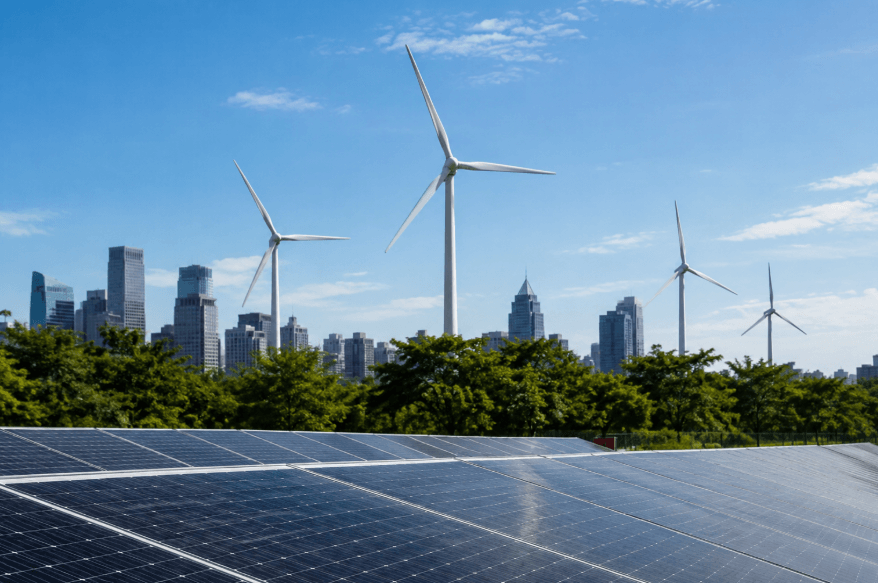
New research highlights the economic impact of Britain’s transition to clean energy
The UK’s green economy is now worth more than £100 billion annually and supports over one million jobs nationwide, according to new research from CBI Economics commissioned by the Energy and Climate Intelligence Unit (ECIU). The findings underline the growing importance of net zero industries to Britain’s economy at a time of political debate over the country’s climate commitments.
The report suggests that clean energy, low-carbon manufacturing and sustainable infrastructure are becoming central pillars of economic growth across the UK, from major cities to rural and coastal communities.
Net Zero Industries Become a Major Economic Force
According to the analysis, businesses directly involved in activities such as solar panel installation, home insulation, wind turbine manufacturing and electric vehicle production employ around 308,000 people across the country.
When associated supply chains and supporting industries are included, the total rises to approximately 1.1 million jobs. Together, these sectors contribute £105 billion in gross value added (GVA), representing nearly 4% of the UK’s economic output.
Workers in the net zero sector also earn higher-than-average salaries. Average annual pay exceeds £43,000, roughly 11% above the national average wage of £39,000.
Louise Hellem, chief economist at the CBI, said the clean energy transition is already deeply embedded in the British economy.
“Clean power and decarbonisation are already a significant and growing part of the UK’s industrial base,” she said. “Across energy, manufacturing, services and supply chains, the UK has the expertise to build on this strength and capture even greater commercial opportunities.”
Billions in Green Investment Planned Across Britain
The report estimates that around £455 billion in potential investment is currently in the pipeline for UK energy infrastructure projects.
This investment surge has been driven largely by government targets to decarbonise Britain’s electricity system by 2030 and achieve economy-wide net zero emissions by 2050.
Researchers found that each worker in the green economy contributes nearly £120,000 annually to the wider economy — around one-and-a-half times the UK average productivity level. The findings arrive as Britain continues to grapple with sluggish economic growth and long-standing productivity challenges.
Around 22,000 small businesses across the UK are also linked to activities supporting emissions reduction and renewable energy expansion, highlighting the role of SMEs in the transition.
Political Debate Intensifies Over Net Zero Targets
The report comes amid growing political disagreement over climate policy.
The Conservatives and Reform UK have both argued for scaling back or abandoning existing net zero commitments, while former Labour Prime Minister Tony Blair has recently called for renewed support for fossil fuel development.
CBI Economics warned that stepping away from net zero policies could damage Britain’s long-term competitiveness.
“At a time when the UK must strengthen energy security and drive growth, the net zero economy is becoming central to the country’s future competitiveness,” Hellem said. “The UK cannot afford to step back from an industry already contributing £100bn to the economy and with huge future growth potential.”
Environmental groups also pushed back strongly against efforts to weaken climate targets.
Sandra Bell, climate campaigner at Friends of the Earth, argued that abandoning green investment would leave Britain lagging behind other economies competing for leadership in renewable energy and low-carbon industries.
Decline of North Sea Oil Jobs Continues
The report also highlights the continuing decline of traditional fossil fuel employment in the North Sea.
Although some politicians have promoted expanded oil and gas extraction as a route to economic growth, employment in the basin has been falling for more than a decade alongside declining production levels.
Researchers estimate that approximately 200,000 North Sea oil and gas jobs have disappeared since 2013, despite years of government support and favourable tax policies for the sector.
Katie White, the UK’s climate minister, said accelerating electrification and expanding domestically generated renewable energy offered the best protection against future fossil fuel price shocks.
“As Britain faces another fossil fuel shock, the only way to shield households and businesses is by accelerating electrification and clean, homegrown power that we control,” she said.
White added that the government viewed climate action as both an economic and generational responsibility.
Green Economy Growing Faster Than Wider UK Economy
Tuesday’s report is the fourth in a series produced by the ECIU and CBI Economics examining the economic effects of the net zero transition.
Previous studies concluded that Britain’s net zero economy has been growing roughly three times faster than the wider UK economy.
The figures in the latest report focus specifically on industries directly linked to emissions reduction and decarbonisation efforts. However, the broader environmental economy — including sectors such as waste management, pollution control, water treatment and nature restoration — supports more than 600,000 additional direct jobs, according to the Office for National Statistics.
Conclusion
The latest findings suggest that the UK’s transition to net zero is no longer simply an environmental objective but an increasingly important driver of economic growth, investment and employment. As political arguments over climate policy intensify ahead of future elections, the report is likely to strengthen the case from businesses and industry leaders that Britain’s green economy is already delivering significant financial benefits nationwide.

Edward Langley is a contributor at Mediarunsearch.co.uk, covering a wide range of topics including news, politics, business, technology, sport, entertainment and lifestyle. He focuses on delivering clear, balanced reporting and useful information that helps readers stay informed about current affairs and developing stories. His work highlights issues, trends and events that matter to everyday audiences, with an emphasis on accuracy, relevance and accessible journalism.