
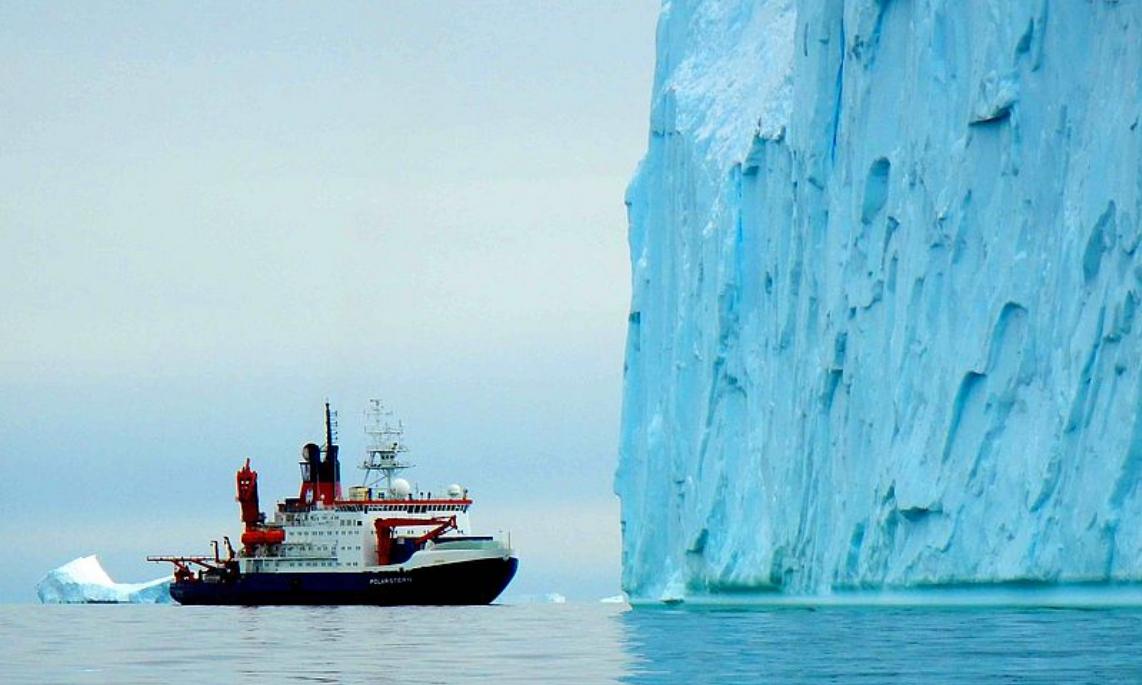
Scientists on an expedition have discovered an ancient river system beneath a massive ice sheet in West Antarctica.


According to the researchers, the landscape of Antarctica was very different millions of years ago, and the discovery shows the effects of climate change that occurred on Earth.
On June 5th, scientists Published Study in academic journal Science advances Reporting the discovery and what happened to the river. Scientists were studying sediment samples from the Amundsen Sea when they discovered evidence of a 40-million-year-old river system running beneath the West Antarctic ice sheet.
Between 34 and 44 million years ago, in the late Eocene period, Earth's atmosphere changed dramatically. Rising carbon dioxide levels and global cooling led to the formation of glaciers on a planet that had previously been free of ice.
Study co-author Johan Klages says studying Earth’s historical record of similar catastrophes “is essential to understanding future extreme climate change.” Klages also said the mission scientists were interested in finding out how such a major climate event would occur in Antarctica, especially given current climate change.
However, the difficulty is that most of West Antarctica is covered in ice, making it difficult to access ocean sediments, which are important resources for studying past environments.
Discovering the ancient river system
In 2017, Klages and other scientists began the expedition, using advanced deep-sea equipment to collect sediments from the frozen sea floor. Drilling 30 meters below the ocean floor, the expedition discovered layers of sediment from two different ages. The bottom layer emerged 85 million years ago, during the Cretaceous period, according to radiometric dating of elements like lead and uranium.
The upper layer contains sediments from the Eocene period, between 30 and 40 million years ago. After analyzing these layers, scientists discovered sediments found in the formation of river systems such as the Mississippi Delta.
Furthermore, the scientists discovered a molecule unique to cyanobacteria in the freshwater, strengthening the hypothesis of an ancient river system in Antarctica. Surprisingly, most of these materials and fragments came from elsewhere in Antarctica, pointing to another location in the Transantarctic Mountains as the river’s origin.
According to scientists, this mountain range was not always so high, but began to grow gradually since the end of the Eocene. The growth of the mountains is associated with a geological event that led to the division of Antarctica into two geographical blocks: East and West.
The rise of the Transantarctic Mountains generated a huge amount of erosion debris, which consists of rocks and minerals. Scientists believe that the river system transported this debris to the Amundsen Sea after the breakup of Antarctica.
“The presence of a transcontinental river system shows that, unlike today, large parts of West Antarctica were above sea level in the form of extensive coastal plains.”

Edward Langley is a contributor at Mediarunsearch.co.uk, covering a wide range of topics including news, politics, business, technology, sport, entertainment and lifestyle. He focuses on delivering clear, balanced reporting and useful information that helps readers stay informed about current affairs and developing stories. His work highlights issues, trends and events that matter to everyday audiences, with an emphasis on accuracy, relevance and accessible journalism.