
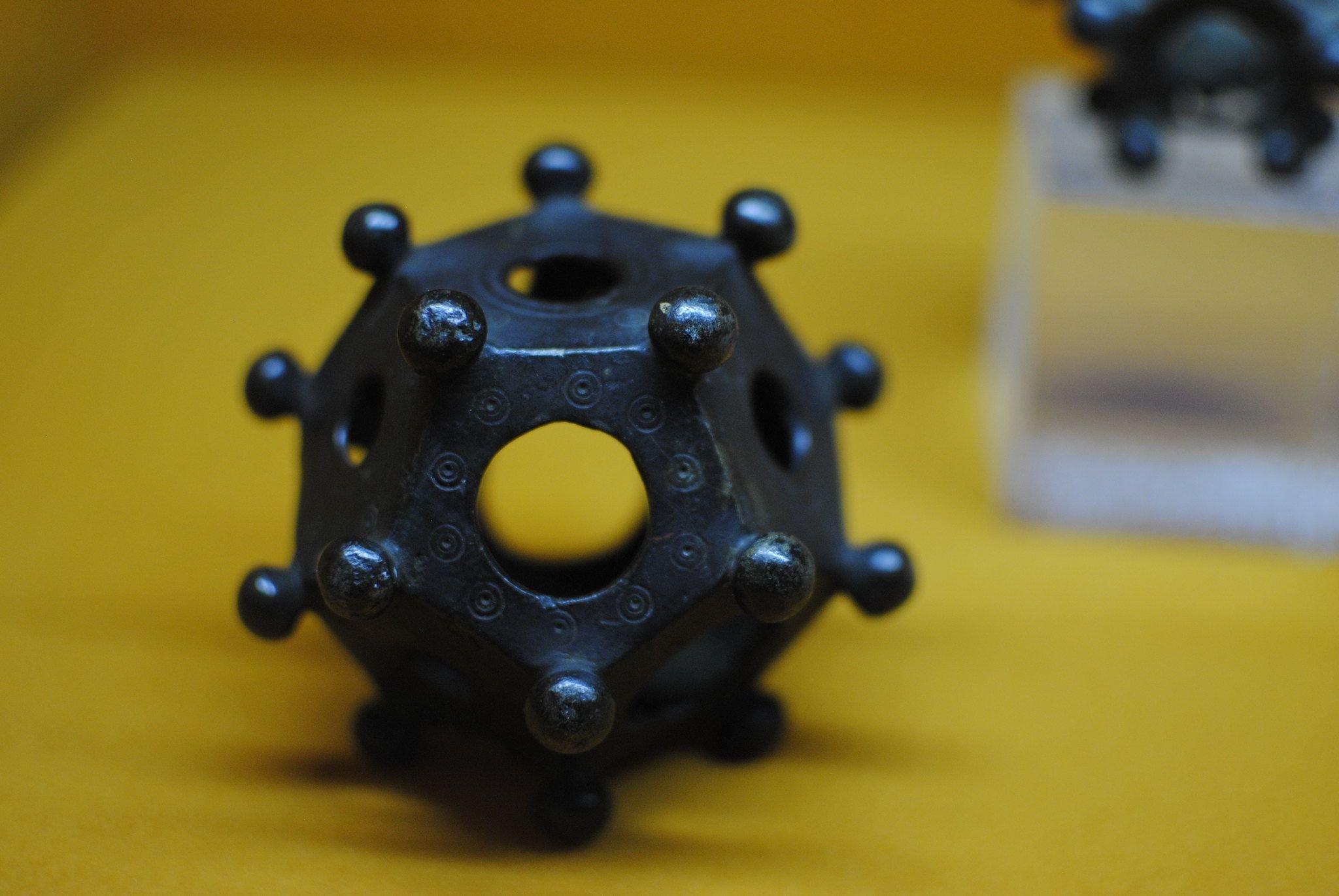
A 1,700-year-old Roman dodecahedron has been discovered at Norton Disney near Lincolnshire in the United Kingdom. The object was found using metal detectors in an area where brooches and coins dating back to the Roman occupation of Great Britain have been found.
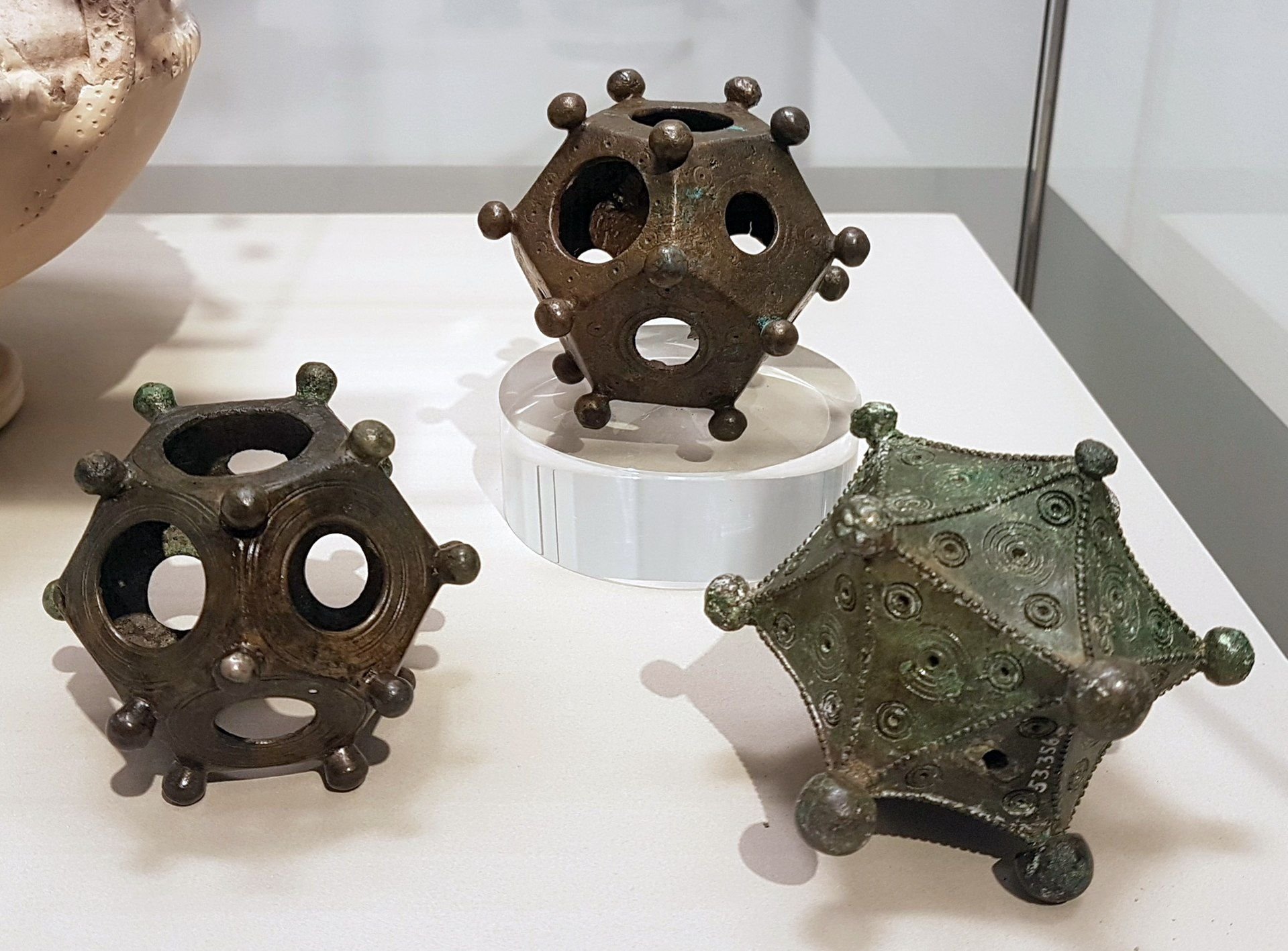
Since its discovery in the recesses of the ancient Roman Empire, the dodecahedron has baffled and fascinated historians, archaeologists, and history buffs. Made from a mixture of copper, tin and lead, these artefacts display a wide variety of decorations and patterns, suggesting a possible diversity.
Roman dodecahedrons are characterized by their polyhedral shape with twelve faces, each pierced by a hole. They vary in size, with some as small as a golf ball and others reaching the size of an orange.
Function of the dodecahedron
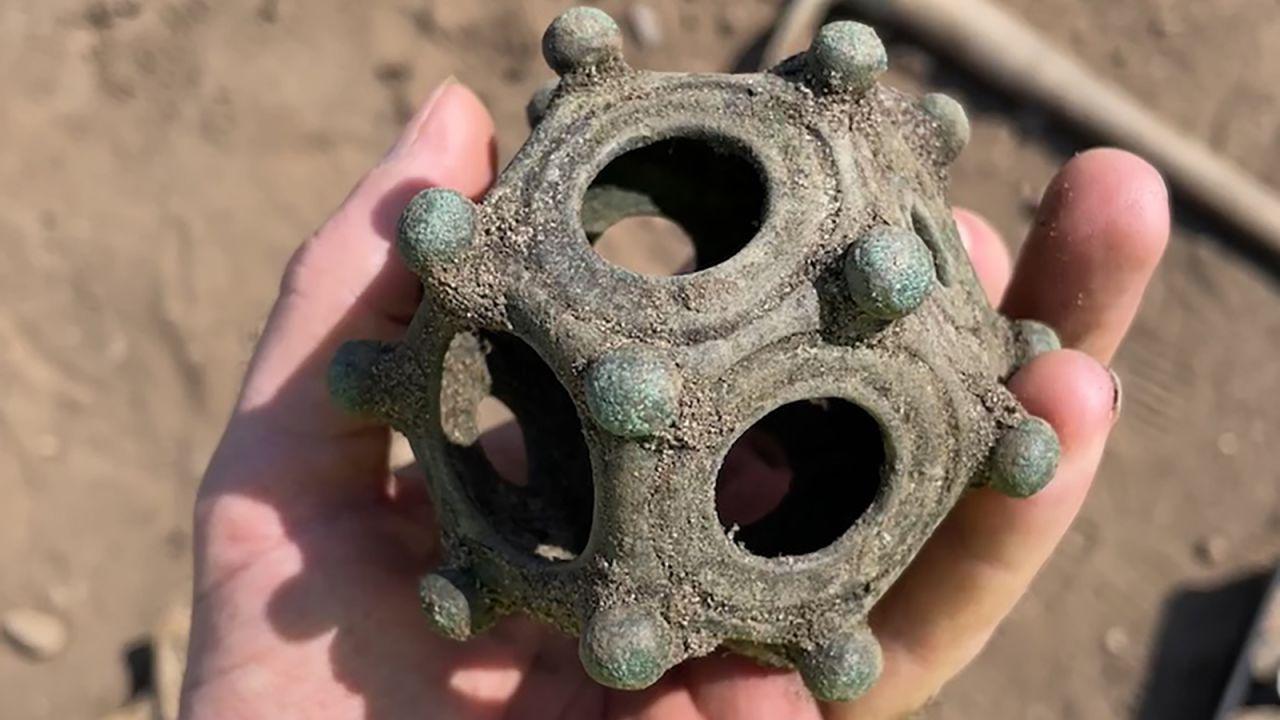
The Roman dodecahedron has been found in various parts of Europe, from northern Britain to eastern Hungary. Although more than 100 of these artifacts have been found, their exact function is unknown.
There is no mention of them in ancient Roman texts, and no images to represent them. The diversity of its sizes, decor and discovery sites only adds to its aura of mystery.
Theories and Speculations
Several theories have been proposed over the years to explain the purpose of the Roman dodecahedron. Some say they may have been used as implements in religious rituals or magical practices, as measuring tools for agriculture, or as children's toys. Another theory suggests that they may have been used as tools for knitting gloves, although there is no concrete evidence for this idea.
High technology
Although it may seem abstract, the dodecahedron has many practical applications in fields such as engineering and science. For example, its form can be used in architectural design, modeling of crystals and molecular structures, as well as in computational geometry applications.
The dodecahedron, as a geometric shape, has an inherent connection with mathematics, particularly three-dimensional geometry and the theory of Platonic solids.
In chemistry, physical models of dodecahedrons can be used to represent atomic arrangements in crystal structures or complex molecules, helping to visualize and understand these structures.
Other Roman Artifacts
Britain is rich in Roman artefacts, the result of almost 400 years of occupation and influence by the Roman Empire on the island. Thousands of Roman coins have been found across Britain, providing important evidence of the economy and trade during the Roman period.
The famous Roman baths are also preserved in the city of Bath in south-west England. Another good example of the Roman presence in Britain is the Roman Walls of London, built in the 2nd century AD. Parts of these walls can still be seen in the City of London today.
Thousands of Roman coins have been found across Britain, providing important evidence of the economy and trade during the Roman period. Roman household utensils such as pottery, glass, cutlery and tools are commonly found at archaeological sites.
Roman occupation
Roman occupation began in AD 43, when the Roman emperor Claudius launched a successful invasion of the island. Roman forces, led by General Aulus Plautius, landed in the southeast of the island and gradually advanced north and west, subduing the local Celtic tribes along the way.
After the initial conquest, the Romans divided Britain into several provinces, including Lower Britain (in what is now southern England) and Upper Britain (corresponding to northern England and southern Scotland).
The occupation ended in the early 5th century when the Roman Empire began to face external and internal pressures. The Romans gradually withdrew from the island to concentrate their resources in the empire.

Henry Blackwell is a contributor at Mediarunsearch.co.uk, covering a wide range of topics including news, politics, business, technology, sport, entertainment, and lifestyle. He focuses on delivering clear, balanced reporting and useful information that helps readers stay informed about current events and emerging developments. His work highlights stories that matter to everyday audiences, with an emphasis on accuracy, relevance, and accessible journalism.