
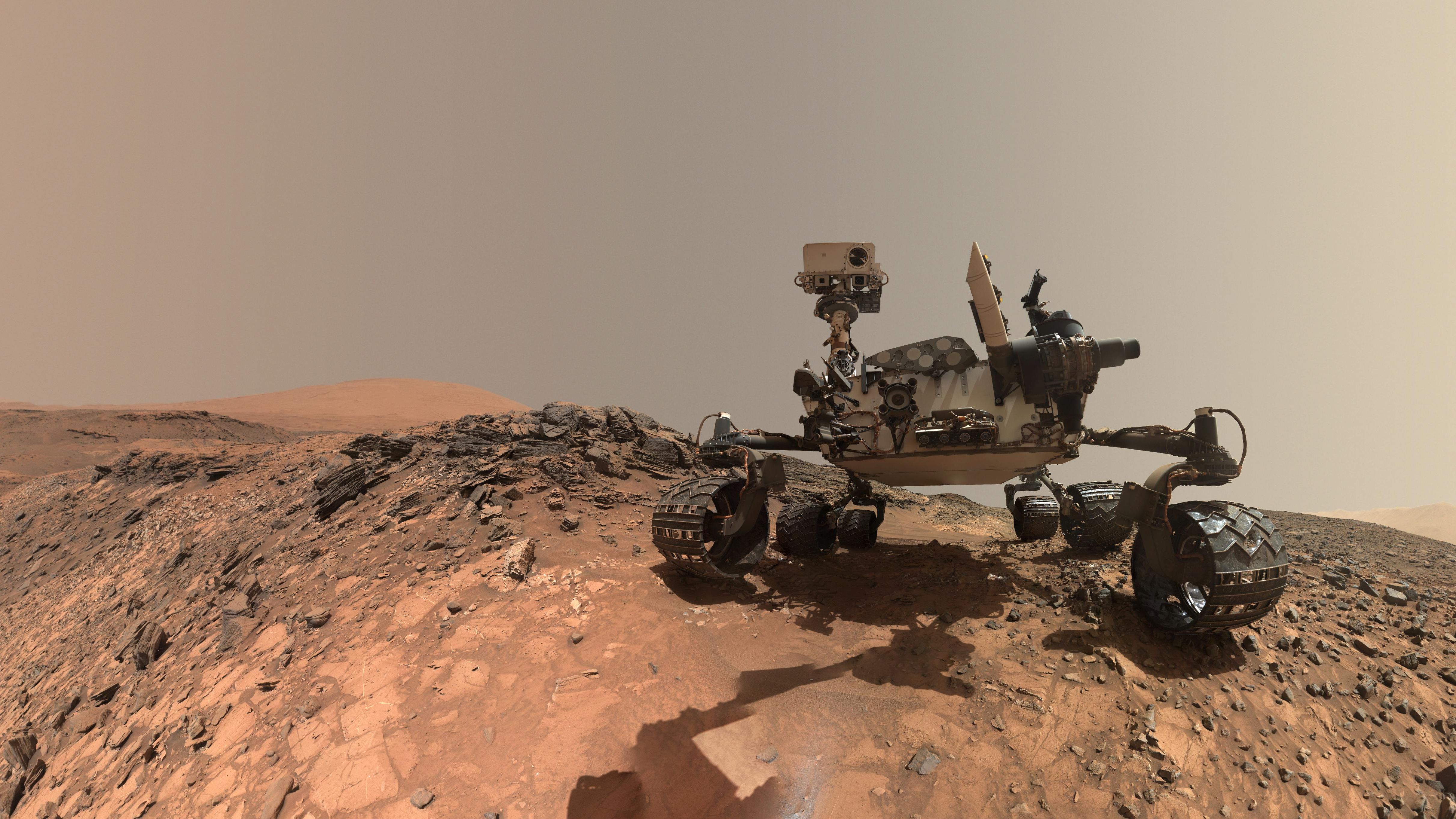
One of the biggest problems with studying Mars is the difficulties caused by the planet's remoteness, which means that any command sent to robots exploring the planet's surface takes eight minutes to be received. For this reason, robots walk only a few meters per day. But the British Space Agency may have the solution for that.
A new program developed in the United Kingdom is introducing a type of artificial intelligence into Mars rovers, allowing them to control the direction in which they will move. This way, instead of just a few metres, they will be able to walk about a kilometer per day, which will make more samples available for analysis for scientists on Earth.
Throughout December, a team of engineers from several companies and universities in Europe tested several autonomous spacecraft navigation programs at the Ibn Battuta Test Center in Morocco. The tests were supervised by representatives of space agencies from the United Kingdom, Germany, France, Spain, Italy and the European Union.
During the tests they covered a total of four navigational techniques:
- ERGO autonomous framework, a system that allows the vehicle not to require human intervention to carry out its operations, giving it not only the autonomy of movement, but also to manage its resources (such as turning off systems that are not being used to conserve energy) and even exploration, allowing it to analyze Interesting parts of the planet found by their sensors that might have been overlooked by the scientists at the control center.
- INFUSE Data Fusion, a system that fuses information from the vehicle's various cameras and sensors to create a kind of location map, allowing safe navigation across the entire surface of the planet.
- I3DS Plug and Play Sensor Suite, a plug-and-play sensor system that allows for greater dynamism in the use of rovers, allowing quick exchange of installed sensors for each type of mission to be performed.
- and ESROCOS, the operating system that would provide all the software and libraries necessary for the vehicle to function in a basic manner, as well as providing the complete basis for other software (such as ERGO or INFUSE) to be installed on the equipment.
It is expected that this new software will already be used in the Horizon 2020 programme, which will take a probe from the European Union space agency to Mars in 2020.
source: March Daily

Charlotte Whitmore is a contributor at Mediarunsearch.co.uk, covering a broad range of topics including news, politics, business, technology, sport, entertainment, and lifestyle. She focuses on delivering clear, balanced reporting and practical information that helps readers stay informed about current events and emerging developments. Her work highlights stories that matter to everyday audiences, with an emphasis on accuracy, relevance, and accessible journalism that keeps readers connected to the issues shaping the UK and beyond.