

We are close to what has been long awaited Total solar eclipse! This rare event is scheduled to take place on Monday (8), but only those in North America will have the privilege of watching it live.
However, the National Aeronautics and Space Administration (NASA) will broadcast the eclipse in real time. The program will start at 2pm Brasilia time and continue until 5pm.
>> Do you want to receive our news 100% free? Participate in our Community on WhatsApp Or join us Telegram channel!
The National Observatory, which is linked to the Brazilian Ministry of Science, Technology and Innovation, also plans to display all phases of the eclipse via its YouTube channel.
Where to watch a solar eclipse?
Mexico will be the first country in North America to witness this event, at 4 p.m. (Brasilia time), followed by the United States, and later Canada.
Some locations in Europe may also have partial visibility of this phenomenon.
In addition to the transmissions, NASA will have photographers along the eclipse's path to take images for scientific studies.
Solar eclipse: in the end, what is the phenomenon?
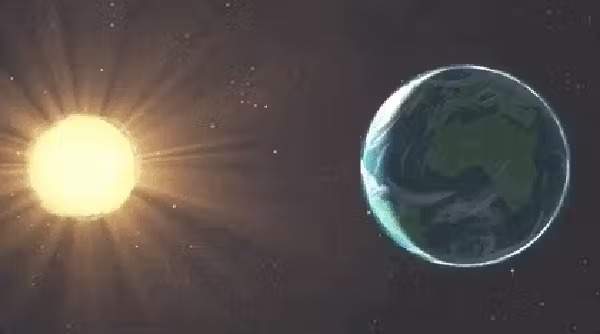
During a solar eclipse, the Moon lies directly between the Earth and the Sun, creating a shadow that blocks the sunlight for a few minutes.
This means that when the event is visible, it will be possible to observe temporary darkness in the sky during midday. This time, this phenomenon can last up to 4 minutes.
The last total solar eclipse seen in Brazil occurred 20 years ago, in 1994. The next one is expected to occur again only in 2044.
How does a solar eclipse happen?
Although its duration is short, it takes about three hours for the Moon to completely cross the disk of the Sun.
This is because although the Sun is about 400 times larger than the Moon, the Moon is about 400 times closer to the Earth. Therefore, they appear similar in size when viewed from our planet.
Is it safe to view it with the naked eye?
During a total solar eclipse, it is safe to look directly at the sun only when the moon is completely covered by its light, but this moment is very short.
Outside of this stage, looking directly at the sun without special protection can cause serious damage to your eyes.
According to NASA, using cameras, binoculars, or telescopes without adequate solar filters can result in immediate eye damage.
Watch the live broadcast on Monday (8)
*With information from Só Notícia Boa

Edward Langley is a contributor at Mediarunsearch.co.uk, covering a wide range of topics including news, politics, business, technology, sport, entertainment and lifestyle. He focuses on delivering clear, balanced reporting and useful information that helps readers stay informed about current affairs and developing stories. His work highlights issues, trends and events that matter to everyday audiences, with an emphasis on accuracy, relevance and accessible journalism.