
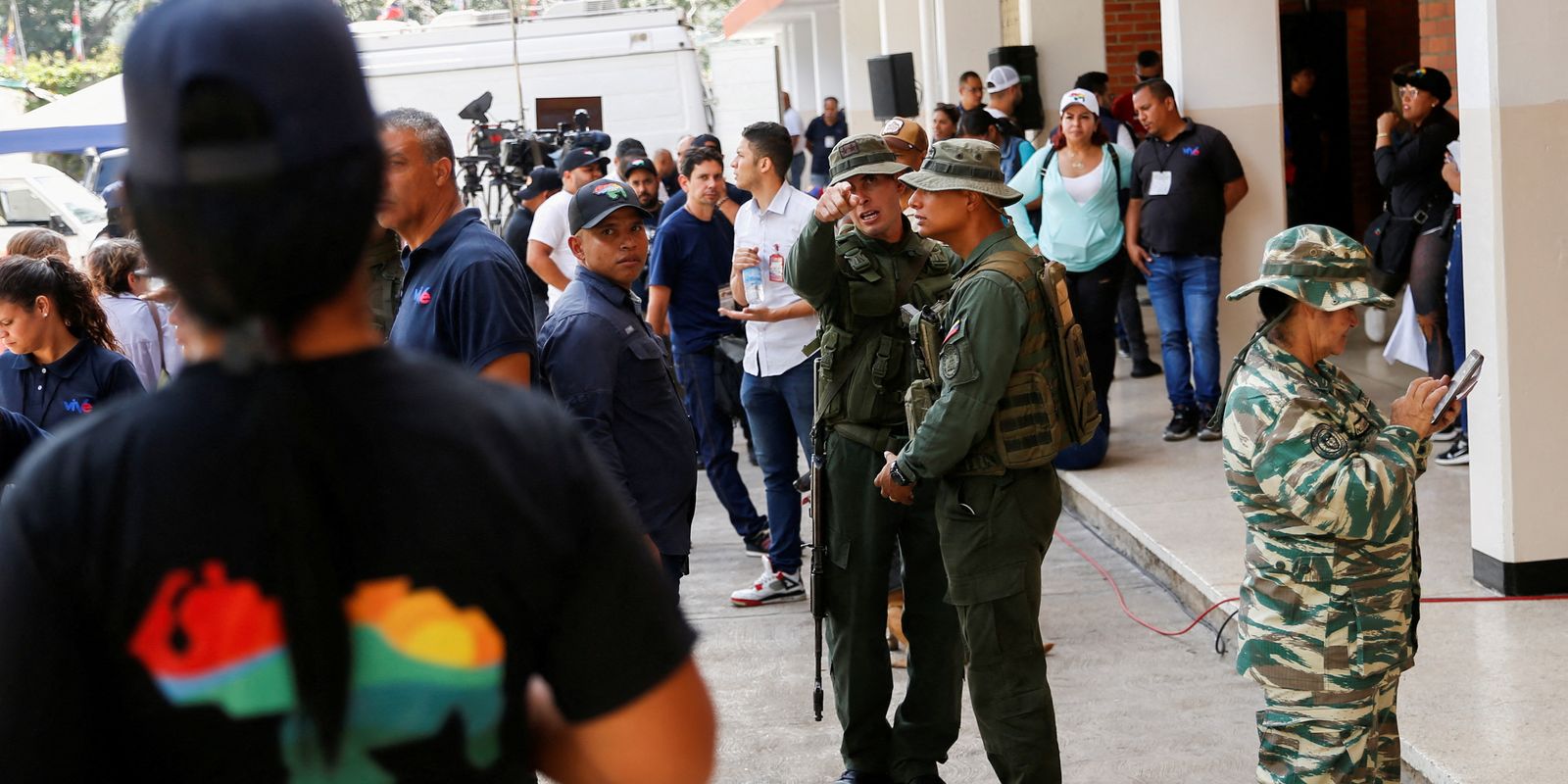
The century-old dispute over control of a South American territory could take new turns on Sunday (3). Venezuelan voters go to the polls to cast their opinion, in a referendum, on redrawing their country's borders with the neighboring republic of Guyana. 

The referendum includes five questions for voters on how Venezuela should behave with regard to an area of 160,000 square kilometers located west of the Essequibo River, which today represents about 75% of Guyana’s territory of 215,000 square kilometers.
The region, rich in minerals and gemstones, has been under Guyana's control since the country's independence in 1966. Before that, it had been dominated by the United Kingdom since the mid-19th century.
The British supported their claim to the territory on the basis that in 1648 the Spanish had ceded the entire territory east of the Orinoco to the Dutch. The Netherlands later transferred part of this land to the United Kingdom.
Venezuela, in turn, claims that the territory belongs to it, as it was part of the Spanish Empire, and there was a presence of Spanish religious in the region, and according to it, the Dutch never occupied the region west of the Essequibo River. . This claim existed even before the country's independence, i.e. when it was still part of Gran Colombia.
The area in Venezuela is known as Guyana Essequipa, or simply Essequibo, and currently appears on official maps of the country as “Zona en Reclamación”, i.e. the claimed area.
Under Guyana's administration, Essequibo includes areas of six provinces, two of which are entirely located there and three of which are mostly located in the area claimed by Venezuela.
Furthermore, Essequibo includes an important part of Guyana's coast, where vast oil reserves were discovered a few years ago and which Guyana is already exploring, in partnership with companies such as North America's ExxonMobil and China's CNOOC.

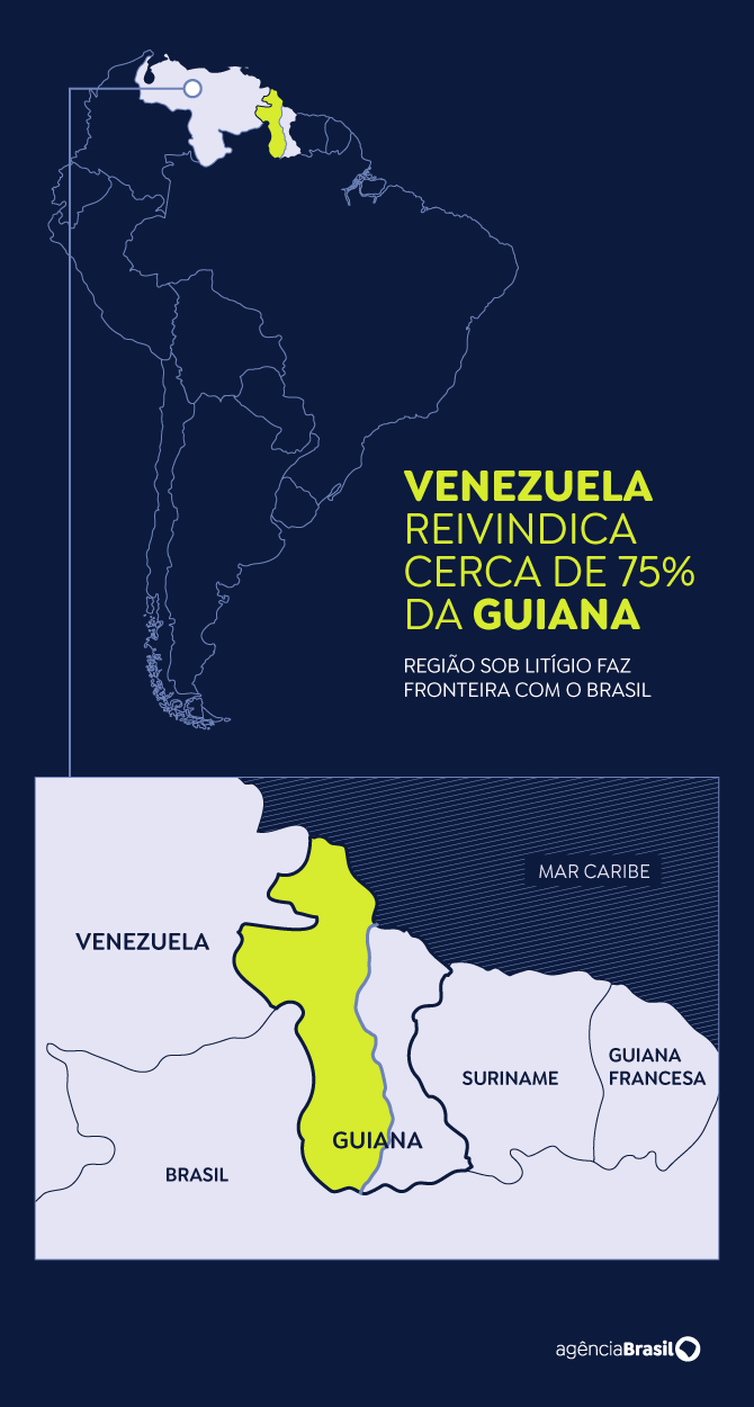
Venezuela claims 75% of Guyana's territory ABC art
Referendum
The first question asked in the referendum is whether Venezuela should reject, “by all means and in accordance with the law” the current border between the two countries. The official position of the Venezuelan government is that the border should be moved east and established at the Essequibo River.
For the Venezuelans, the current borders were fraudulently established by the 1899 Paris Arbitration Award, which involved two British arbitrators, two North American arbitrators (one appointed by Venezuela), and one Russian (appointed by the previous four).
Venezuela accepted the mediation of the Arbitration Court, and at first, although disturbed, complied with the restrictions it imposed, which were largely in favor of the British. But decades later, he decided to refute the agreement, claiming fraud in the arbitration award.
The popular poll also asks whether voters agree to “oppose, by all means, and in accordance with the law, a requirement for Guyana to act unilaterally at sea pending border demarcation.” The Guyana coast in question includes part of the giant Stabroek field, whose reserves are estimated at about 11 billion barrels of oil.
The other question is whether the voter approves of the creation of the state of Guyana-Esquipa and the granting of Venezuelan citizenship to the inhabitants of that region.
The last two questions relate to international negotiations on the definition of borders. One referendum asks whether the voter accepts the 1966 Geneva Convention as the only tool capable of resolving the dispute.
In 1966, shortly before Guyana's independence, the United Kingdom and Venezuela signed an agreement in Geneva stating that Venezuelans and Guyanese should form a joint committee to resolve the border issue between the two countries.
But the agreement itself stipulates that if there is no solution, the issue must be referred to the UN Secretariat, which is what happened in the 1980s. In 2018, the Secretary-General of the United Nations, António Guterres, decided that this case should be tried before the International Court of Justice in The Hague.
The problem is that Venezuela does not recognize the International Court of Justice as the appropriate body to resolve this issue. The referendum asks voters whether they support Venezuela's “historic position of not recognizing the jurisdiction of the International Court of Justice” to resolve the dispute.
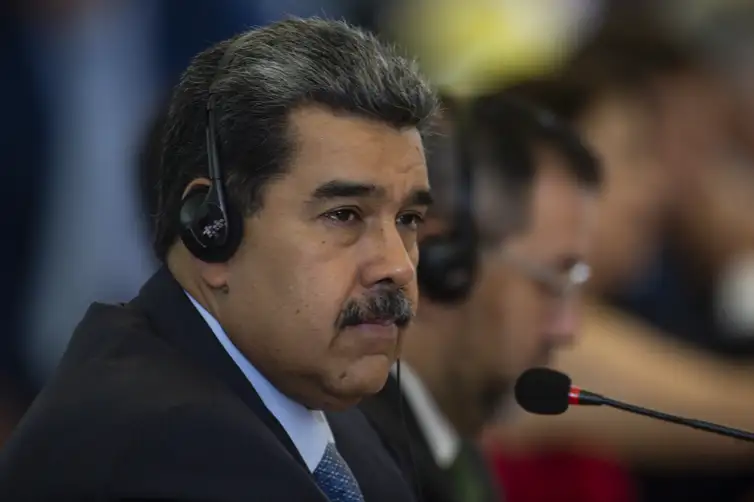
Venezuelan President Nicolas Maduro calls for “yes” in the referendum – Marcelo Camargo/Brazil Agency
The Venezuelan government calls for voters to answer “yes” to the five questions. President Nicolas Maduro personally participated in the election campaign with a “yes” vote and called on residents to vote on Sunday. According to him, “Saving Guyana Esquipa” is “a crusade and a historic journey.”
“The election campaign developed by the people as heroes to save Guyana Esquipa was unprecedented, unique and remarkable. A beautiful historical journey towards #3Dic [hashtag para o 3 de dezembro]Never before have there been consultations on a topic of such importance in which the people decide the fate of Essequibo and the territorial integrity of all of Venezuela. The people alone save the people!”, Maduro wrote on social networks on Wednesday (29).
'Provocative and illegal'
The Guyanese presidency called on government agencies to raise national awareness about the referendum. A series of events, including days of prayer and “Unity Circles”, from Friday (1st) to Sunday (3rd), and a “Night of National Reflection” on the day of the Venezuelan referendum, are scheduled to be held in the country.
Guyanese President Irfaan Ali stated that the border area will be reinforced with police and armed forces. The Government of Guyana considers the actions taken by Venezuela, such as the referendum, to be aggressive, baseless and illegal.
In early November, Guyana's National Assembly approved a resolution classifying the referendum as “provocative, illegal, invalid and without international legal effect.”
At the end of October, Guyana requested urgent protection from the International Court of Justice, to prevent Venezuela from occupying Guyana's territory. “Guyana has no doubt about the validity of the arbitration award and the land border, which Venezuela has accepted and recognized as its international border for more than 60 years,” a memorandum issued by the Guyanese government on October 31 said.
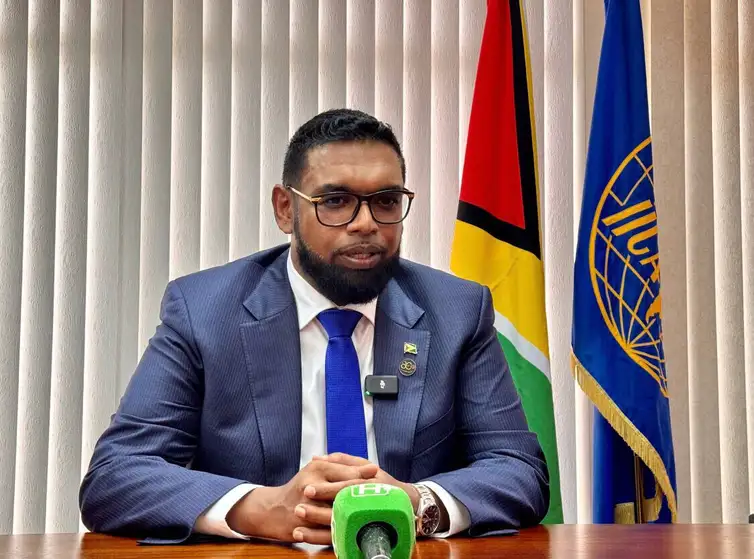
President of Guyana, Mohamed Irfaan Ali, at the Conference of Agriculture Ministers of the Americas – Inter-American Institute for Cooperation on Agriculture (IICA) – Disclosure
Diplomatic solution
The matter was discussed last week between representatives of the two countries, at a meeting of South American foreign and defense ministers, in Brasilia. Brazilian Foreign Minister Mauro Vieira announced at the end of the meeting that Brazil wants a diplomatic and peaceful solution to this dispute.
“Brazil, like all other countries, has preached for understanding, diplomatic discussion and peaceful resolution of disputes. I have had the opportunity to say, with regard to the comments of the two countries, that Brazil has encouraged, like all other countries in the region, the necessity of always resolving differences through negotiations.” , through understandings, through arbitration, and resorting to international courts such as the International Criminal Court. “The court is from The Hague,” the Brazilian advisor said at the time.
The area claimed by Venezuela lies on the border with Brazil across the state of Roraima. A bridge connects the Brazilian city of Bonfim with the city of Lethem in Guyana. Many Brazilians visit, work and do business across the border.
The Ministry of Defense stated that it is monitoring the situation and intensifying its movements on the “northern borders of the country,” while increasing the presence of military personnel in the region.

Charlotte Whitmore is a contributor at Mediarunsearch.co.uk, covering a broad range of topics including news, politics, business, technology, sport, entertainment, and lifestyle. She focuses on delivering clear, balanced reporting and practical information that helps readers stay informed about current events and emerging developments. Her work highlights stories that matter to everyday audiences, with an emphasis on accuracy, relevance, and accessible journalism that keeps readers connected to the issues shaping the UK and beyond.