
A second-magnitude explosion caused interference with radio equipment in the Southern Hemisphere
Published on: 02-17-2024 at 12:00
Written by: João Victor Reynol de Andrade
In about 4 billion years, the Sun will burn off the last hydrogen molecules, and what follows will be the final gasps of a celestial furnace that will consume the Earth (and humanity, or what's left of it) in the process, leaving only a white dwarf behind. The size of a planet and a hundred times smaller. Until that happens, the star will continue to simmer in space as it has for 4 billion years, but that doesn't mean the sun can't still pose a potential danger to Earthlings.
A potential danger to human technological civilization is solar flares, also called coronal mass ejections, which expel thousands of radiation-charged particles from the Sun into the void. Every now and then our planet is exposed to one of them, which can vary depending on the location and severity of the injury, as scientists around the world recorded last Friday morning (9) when one of these explosions reached Brazilian territory.
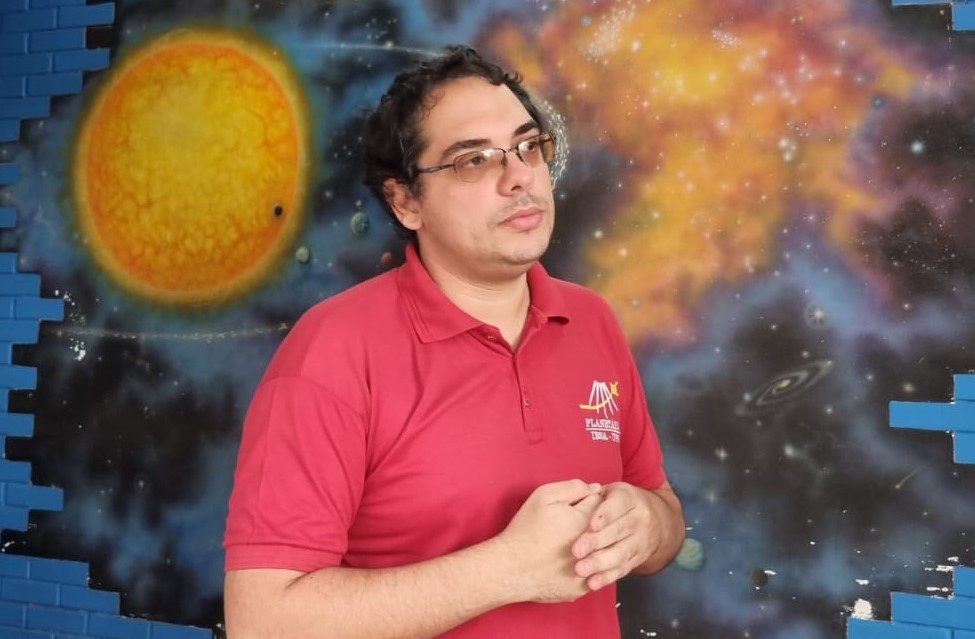
According to astronomers' calculations, this explosion was of magnitude M and caused a power outage to shortwave radio equipment in both South America and Africa. According to the professor of astronomy at the Federal University of Goiás (UFG) and director of the Goiânia Planetarium, Rafael Santucci, this radioactive radiation came during a period of high solar activity that is expected to continue until 2025.
Continues after ad
“The Sun has an activity cycle every 11 years, and every 5 years we have a peak and a trough in which we see an increase or decrease in activity respectively. At the end of 2023 until 2025, we will be under the influence of a maximum period of solar activity, so until then we may “We will have more cases like this.”
These solar explosions are the result of the way the Sun was formed, and according to him, stars do not have solid, solid bodies like planets, but rather are composed of a “sea” of plasma, the fourth state of matter, which is a mixture of particles charged by ionizing radiation. For this reason, its rotation also varies due to the effect of gravity on the Sun, which is why solar explosions occur.
“Because of gravity, the Sun's equator rotates faster than the polar region, so over time the surface material wrinkles and deforms. What happens is we see this arc-shaped deformation break and these particles are released, which is what we call this explosion. And this material is highly charged and it affects the field Magnetic wherever it passes, whether on planets or satellites.
According to him, in a more intense event it would be possible to see the aurora borealis in central Goiás, but it may not be possible to take a photo due to the way they interfere with electronic devices. However, he said astronomical observation teams can predict and anticipate such an event to better warn residents if any damage occurs.
“The Earth's magnetic and atmospheric field would normally hold the line and direct this excess radiation towards the poles, which is why we see the northern lights in these regions. However, in the event of a more intense explosion, we would be able to see the aurora in Goiânia, for example, which It will happen when the Earth does not have excess radiation.However, if this happens we may cause damage to devices such as cell phones and computers by interfering with the small magnetic field they produce.
But Al-Falaki explains that there is no radiation risk for people to move around in the open during this occasion, despite the technological and information blackout.

Edward Langley is a contributor at Mediarunsearch.co.uk, covering a wide range of topics including news, politics, business, technology, sport, entertainment and lifestyle. He focuses on delivering clear, balanced reporting and useful information that helps readers stay informed about current affairs and developing stories. His work highlights issues, trends and events that matter to everyday audiences, with an emphasis on accuracy, relevance and accessible journalism.