
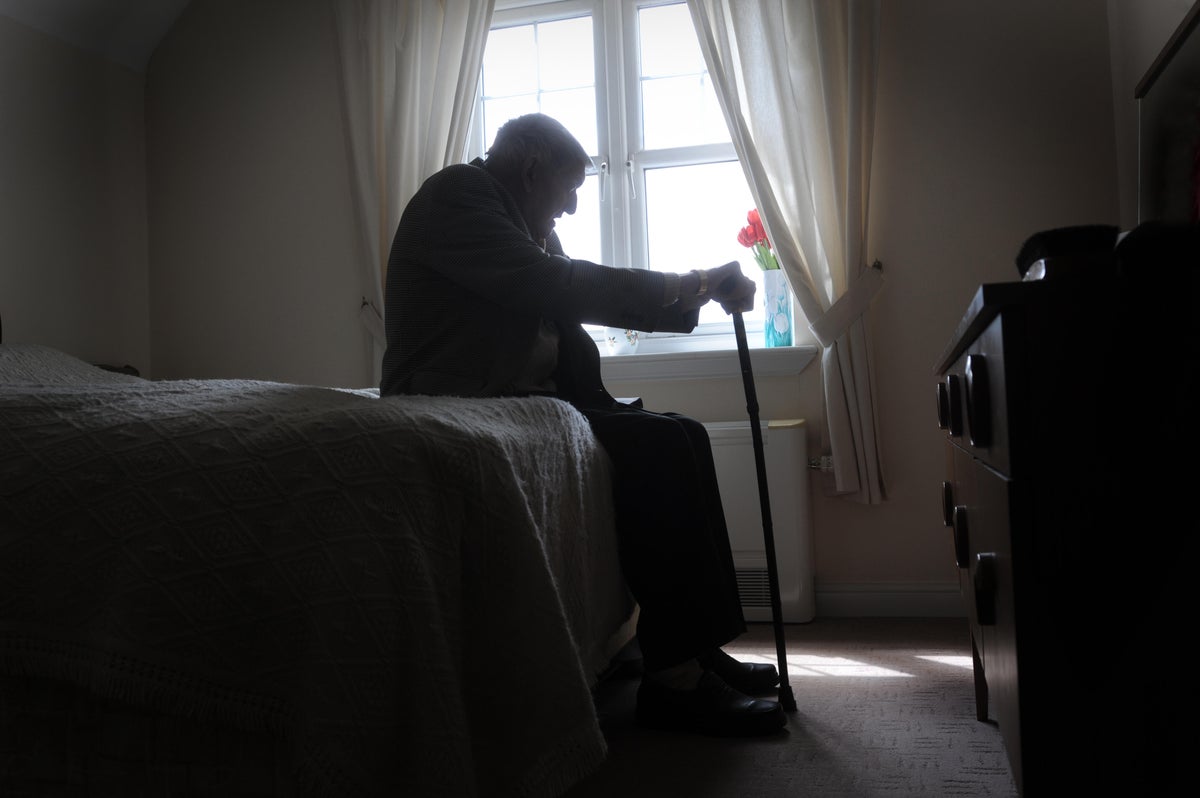
A new study finds that feeling lonely may increase the risk of dementia.
Risk factors for Alzheimer’s disease and related dementia (ADRD) include smoking, excessive alcohol consumption, lack of sleep and frequent exercise.
Researchers found that people with these habits were more likely to be lonely and lack social support.
While ADRDs can be caused by many immutable things like genes, the study offers an easier way to reduce the risk of these neurological conditions.
By providing more social support and putting in place more preventive measures to avoid loneliness, people can avoid being diagnosed with ADRD.
The researchers examined data from 502,506 participants in the UK Biobank and 30,097 people in the Canadian Longitudinal Study of Aging.
Both studies asked participants about loneliness and frequency of social interaction and social support.
In the Canadian study, increasing regular participation in physical exercise with others was associated with a 20.1% decrease in the odds of feeling lonely and a 26.9% decrease in having little social support.
Physical and mental health factors previously associated with ADRD, such as cardiovascular disease, visual or hearing impairment, diabetes, and neurotic and depressive behaviors, have also been associated with social isolation.
Data from the UK showed that being hard of hearing when surrounded by background noise led to a 29% increase in the odds of feeling lonely.
People who struggle with hearing also saw a 9.86% increase in the odds of a lack of social support.
The likelihood of feeling lonely and helpless was 3.7 and 1.4 times higher, respectively, as a function of the participant’s score for neuroticism.
Neuroticism is a personality trait used to describe someone who experiences anxiety, depression, and other negative emotions.
ADRDs are a growing public health crisis, with an annual global cost of more than $1 trillion.
According to Alzheimer’s Research UK, there are 944,000 people living with dementia in the UK. This will increase to more than 1 million by 2030 and more than 1.6 million by 2050.
Kimia Shavegi (right), McGill University, Canada, and lead author, said: “Given the uncertain impact of social distancing measures imposed by Covid-19, our findings underscore the importance of investigating the multiscale impact of social isolation to inform public health interventions for ADRD. .”
This study has been published in the journal PLoS ONE.
Coins
A new study finds that feeling lonely may increase the risk of dementia.
Risk factors for Alzheimer’s disease and related dementia (ADRD) include smoking, excessive alcohol consumption, lack of sleep and frequent exercise.
Researchers found that people with these habits were more likely to be lonely and lack social support.
While ADRDs can be caused by many immutable things like genes, the study offers an easier way to reduce the risk of these neurological conditions.
By providing more social support and putting in place more preventive measures to avoid loneliness, people can avoid being diagnosed with ADRD.
The researchers examined data from 502,506 participants in the UK Biobank and 30,097 people in the Canadian Longitudinal Study of Aging.
Both studies asked participants about loneliness and frequency of social interaction and social support.
In the Canadian study, increasing regular participation in physical exercise with others was associated with a 20.1% decrease in the odds of feeling lonely and a 26.9% decrease in having little social support.
Physical and mental health factors previously associated with ADRD, such as cardiovascular disease, visual or hearing impairment, diabetes, and neurotic and depressive behaviors, have also been associated with social isolation.
Data from the UK showed that being hard of hearing when surrounded by background noise led to a 29% increase in the odds of feeling lonely.
People who struggle with hearing also saw a 9.86% increase in the odds of a lack of social support.
The likelihood of feeling lonely and helpless was 3.7 and 1.4 times higher, respectively, as a function of the participant’s score for neuroticism.
Neuroticism is a personality trait used to describe someone who experiences anxiety, depression, and other negative emotions.
ADRDs are a growing public health crisis, with an annual global cost of more than $1 trillion.
According to Alzheimer’s Research UK, there are 944,000 people living with dementia in the UK. This will increase to more than 1 million by 2030 and more than 1.6 million by 2050.
Kimia Shavegi (right), McGill University, Canada, and lead author, said: “Given the uncertain impact of social distancing measures imposed by Covid-19, our findings underscore the importance of investigating the multiscale impact of social isolation to inform public health interventions for ADRD. .”
This study has been published in the journal PLoS ONE.
Coins

Charlotte Whitmore is a contributor at Mediarunsearch.co.uk, covering a broad range of topics including news, politics, business, technology, sport, entertainment, and lifestyle. She focuses on delivering clear, balanced reporting and practical information that helps readers stay informed about current events and emerging developments. Her work highlights stories that matter to everyday audiences, with an emphasis on accuracy, relevance, and accessible journalism that keeps readers connected to the issues shaping the UK and beyond.