
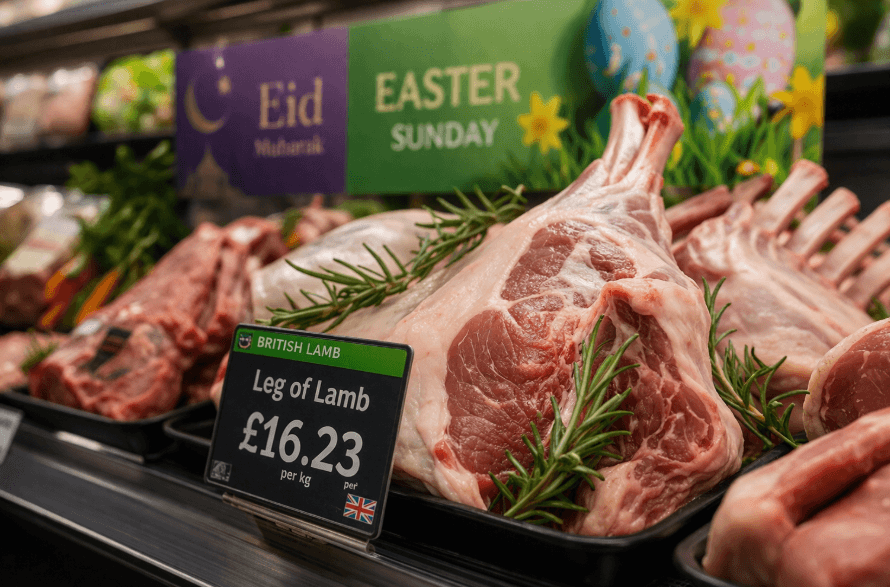
As British households prepare for the Easter bank holiday, many are finding that a traditional roast lamb lunch will cost significantly more this year. A combination of seasonal demand linked to both Easter and Eid, alongside tightening supply, has driven lamb prices across the UK to unprecedented levels.
Lamb prices surge across major UK supermarkets
Shoppers are facing a sharp rise in the cost of lamb, with prices up by around 12.5% compared with the same period last year, according to retail analysts at Assosia.
Across leading supermarkets including Tesco, Sainsbury’s, Morrisons and Asda, the average price of a leg of lamb has reached £16.23 per kilogram, up from £14.43 a year ago.
Some of the steepest increases have been recorded on premium cuts. At Sainsbury’s, a British butterflied leg has risen by 33.3%, climbing from £15 to £20. Meanwhile, a half leg of Taste the Difference Welsh Hill lamb has increased by more than 22%.
At Tesco, prices have also climbed notably, with its Finest lamb shoulder rising by 16.4% year-on-year.
Butchers and farm shops report rising costs
Independent retailers are seeing similar trends. Sam Bagge, manager of the award-winning Walsingham Farm Shop in Norfolk, described current prices as the highest he has encountered.
A 2.5kg leg of locally sourced, high-welfare lamb is now selling for around £75, compared with £65 last year.
The price rise is already influencing consumer behaviour. Mr Bagge noted a shift towards more affordable alternatives, with demand for rolled shoulder of pork increasing by roughly 30%. Priced at around £27, it is proving a more economical option for families and larger gatherings.
“Perfect storm” of demand during Easter and Eid
Industry figures point to a convergence of factors driving the surge. Wholesale lamb prices have risen from approximately £7.20 per kilogram last Easter to nearly £8.40 today, according to the Agriculture and Horticulture Development Board.
Livestock auctioneer James Little described the situation as a “perfect storm”.
Seasonal demand peaks
The timing of religious festivals has played a key role. Eid, which follows Ramadan, traditionally sees a spike in lamb consumption within Muslim communities. This year, that demand has coincided closely with Easter, amplifying pressure on supply.
Mr Little also highlighted longer-term demographic trends, noting that a growing Muslim population in Britain is sustaining stronger year-round demand for lamb.
Previous AHDB data suggests that around 80% of halal consumers in the UK eat lamb weekly, compared with just 6% of the wider population.
Strong export market for British lamb
At the same time, British lamb remains highly sought after in European markets, particularly in France, Belgium, the Netherlands and Portugal. This export demand is further tightening domestic supply.
Welsh farmer Gareth Wynn Jones pointed out that Portuguese consumers, in particular, favour lamb for festive occasions, often preparing it on barbecues rather than as a traditional roast.
Falling sheep numbers add to supply pressure
Supply constraints are compounding the issue. According to the National Sheep Association, the UK currently has around 14.7 million breeding ewes — the lowest figure in living memory.
Dave Barton, livestock board chairman at the National Farmers’ Union, said the imbalance between supply and demand is a primary driver of rising prices.
However, he warned that deeper structural challenges are affecting the sector.
Farmer confidence under strain
Mr Barton pointed to declining confidence among sheep farmers, driven by the gradual removal of direct government subsidies, rising operational costs and ongoing market volatility.
These pressures, he said, are discouraging investment and threatening the long-term viability of sheep farming businesses across the UK.
Weather conditions have also played a role. A dry year has reduced available grazing, leading to fewer pregnant ewes and ultimately a smaller lamb crop.
Outlook for consumers and the farming sector
With demand expected to remain strong and supply constrained, lamb prices are unlikely to ease in the short term. For consumers, this may mean reconsidering traditional Easter menus or opting for more affordable cuts and alternative meats.
For the farming industry, the situation underscores the need for policy support and investment to rebuild flock numbers and ensure long-term resilience.
Conclusion
The sharp rise in lamb prices this Easter reflects a complex interplay of cultural demand, global trade and domestic agricultural challenges. While shoppers feel the immediate impact at the checkout, the underlying issues highlight broader pressures facing the UK’s sheep farming sector — and the delicate balance between supply, demand and sustainability.

Edward Langley is a contributor at Mediarunsearch.co.uk, covering a wide range of topics including news, politics, business, technology, sport, entertainment and lifestyle. He focuses on delivering clear, balanced reporting and useful information that helps readers stay informed about current affairs and developing stories. His work highlights issues, trends and events that matter to everyday audiences, with an emphasis on accuracy, relevance and accessible journalism.