
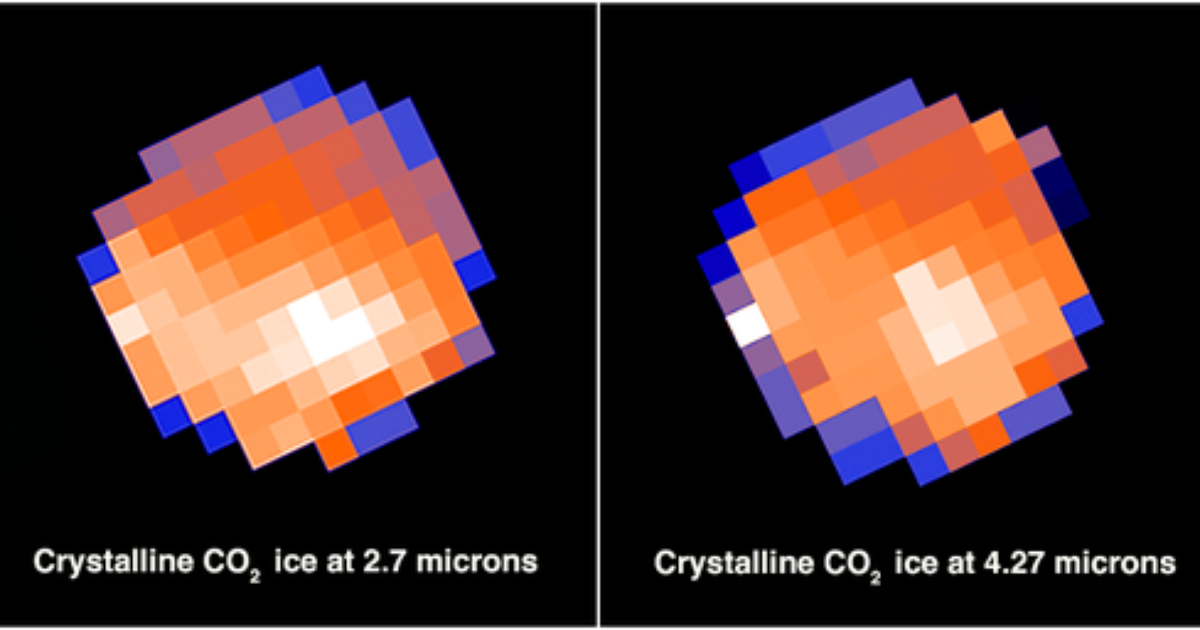
The James Webb Telescope discovered carbon dioxide in a specific region of the moon Europa. The compound likely came from the ocean beneath its surface
September 21
2023
– 7:02 pm
(Updated at 8:44 p.m.)
Carbon dioxide was found relatively recently in the frigid surface area of Europa, one of Jupiter’s moons. The compound was detected by James Webb Telescope For scientists, it likely came from the ocean beneath the surface of this natural satellite.
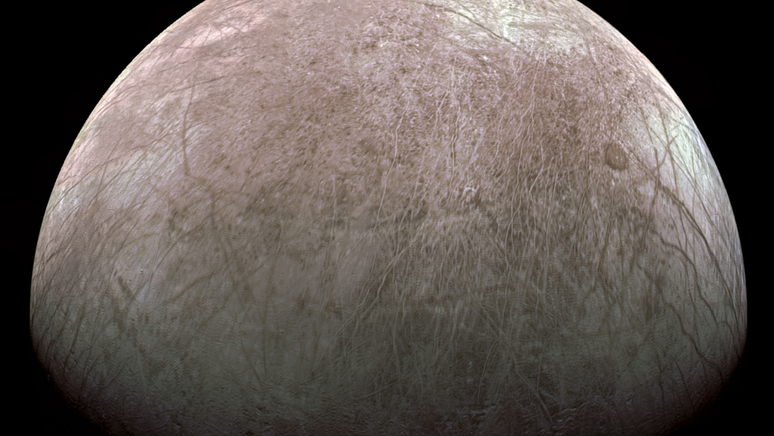
Image: NASA, JPL-Caltech, SwRI, MSSS; Andrea Lack/Canaltech
Europa is slightly smaller than our Moon, and its frozen crust hides an ocean of liquid water extending up to 160 kilometers. However, scientists have not yet confirmed whether this ocean contains carbon and other elements necessary for life as we know it, but with the discovery they may be closer to that.
Webb’s data showed that carbon dioxide is abundant in Tara Reggio, a geologically young region on this moon. The surface ice has been disturbed, and there is likely some exchange of material between the subsurface ocean and the ice covering Europa.
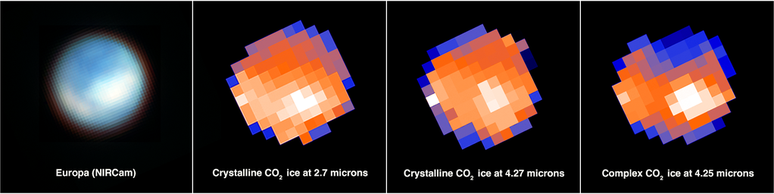
Samantha Trumbo, lead author of one of the studies related to the new data, explains that the concentration of carbon dioxide there means it came from the moon’s ocean. Since the compound is unstable on the surface of Europa and is concentrated in a young region, scientists believe it arrived there recently (geologically speaking).
Although carbon dioxide had already been detected in Europa’s ice in other studies, it was not yet clear whether it appeared there because it came from the ocean or if it had taken a “cosmic ride” on the moon’s surface. Meteorites That hit the moon. New data from Webb make the origin less mysterious: the compound was found in an area dominated by cracks in the ice, caused by blocks forced to the surface thanks to geological processes.
Scientists also used Webb’s capabilities to search for evidence of plumes of water vapor emanating from Europa’s surface, as the telescope did. Hubble He found them in his notes. The new data showed no such activity, but that does not mean it is not happening. “There’s always the possibility that these plumes are variable, and that you may only see them at certain times,” added co-author Heidi Hamel.
This is just the beginning of the discoveries about Europa, as Trumbo and his colleagues devote more observing time with Webb to study the moon again. at the same time, European probe juice It continues its journey to Jupiter and its natural moons. Once there, your observations could help scientists better understand Europa, its compounds, and the habitability of life there.
The articles were published with the results in the journal Sciences.
Source: Science (1, two); via: NASA, American Scientific
Popular on Canaltech:

Edward Langley is a contributor at Mediarunsearch.co.uk, covering a wide range of topics including news, politics, business, technology, sport, entertainment and lifestyle. He focuses on delivering clear, balanced reporting and useful information that helps readers stay informed about current affairs and developing stories. His work highlights issues, trends and events that matter to everyday audiences, with an emphasis on accuracy, relevance and accessible journalism.