
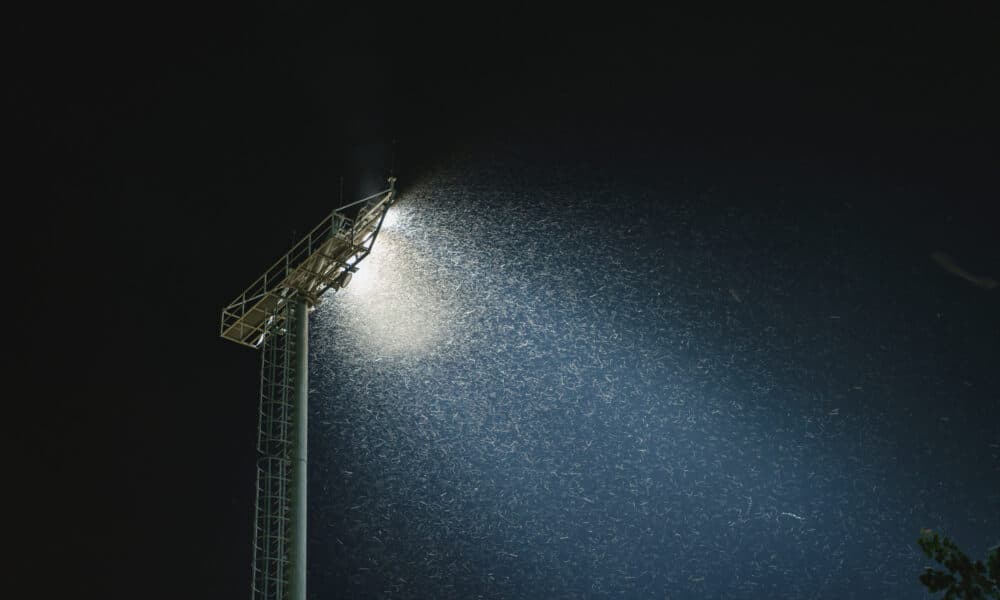
The attraction of insects to nightlight is as old as human presence around campfires.
This phenomenon, which is often represented in art, music and literature as something mysterious and magical, raises the fundamental question: why? Insects Are you irresistibly drawn to light at night?
Although the observation has been consistent over the centuries, explanations for this remarkable behavior are still a subject of study and debate.
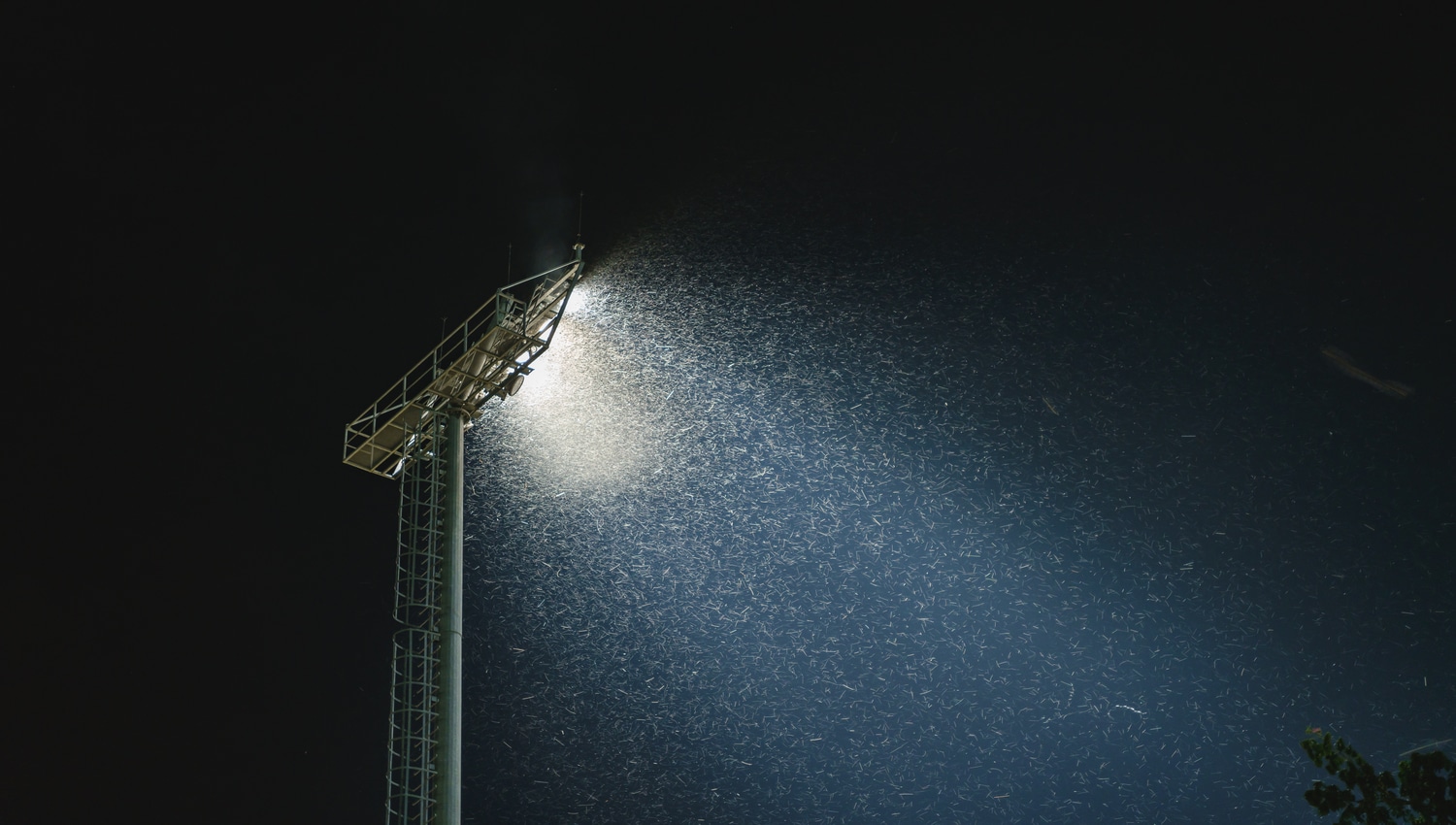
Source: punontawat / shutterstock
Flame heat and other theories
A preliminary hypothesis suggests that the heat emanating from the flame could be an attractant for insects. However, this theory loses its strength when we take into account that most insects are attracted to cool lights, not those associated with heat.
Another idea suggested that insects confused nearby light with the moon, and used it as a reference for celestial navigation. Although some insects use the moon to orient themselves, this theory does not fully explain the observed phenomenon.
Backlight response
Detailed studies conducted at Imperial College London and sites in Costa Rica revealed an interesting behavior called the “dorsal light response.”
When insects fly near artificial light sources, they constantly turn their backs toward the light. This response has been observed in several cases ClassifyIt is a natural strategy to maintain the correct flight orientation.
Since there is generally more light coming down from the sky than coming from the ground, turning your back to artificial lights changes your flight paths.
Unusual flight patterns
By analyzing high-speed videos, the researchers noticed that many insects circle the lights, but they rarely collide. Tilting their backs toward the light caused them to rotate around the light source, avoiding collisions.
When flying directly into the light, many insects turn upside down, keeping their backs facing the lamp.
Unraveling the mystery: unusual behaviors of nocturnal insects
In addition to responding to dorsal light, other interesting behaviors have been observed during the studies. When the insects flew straight into the light, many chose a strange maneuver: they turned upside down, keeping their backs facing the lamp.
This pattern, accompanied by a sudden drop in the air, adds further complexity to the mystery of nocturnal attraction.
These findings highlight the continuing need for research to unravel why insects are attracted to light, revealing extraordinary nuances in their nocturnal behaviors.
Although insect attraction to nocturnal light remains many mysteries, the response to dorsal light is emerging as a crucial behavior in this fascinating nocturnal landscape.
By turning their backs toward the light, insects modify their flight paths in interesting ways, avoid collisions and display patterns of behavior that defy conventional explanations.
Understanding these phenomena not only sparks scientific curiosity, but also reveals the extraordinary complexity and adaptability of the creatures that share our nocturnal environment.

Edward Langley is a contributor at Mediarunsearch.co.uk, covering a wide range of topics including news, politics, business, technology, sport, entertainment and lifestyle. He focuses on delivering clear, balanced reporting and useful information that helps readers stay informed about current affairs and developing stories. His work highlights issues, trends and events that matter to everyday audiences, with an emphasis on accuracy, relevance and accessible journalism.