
Tech Giant Explores New AI Hardware for the Workplace
Microsoft is testing a new generation of artificial intelligence-powered wearable devices aimed at office workers, as the company looks to expand how employees interact with AI tools beyond traditional laptops and desktop computers.
The technology firm revealed two experimental hardware concepts during its annual developer conference, signalling a broader push towards AI-integrated workplace devices. The prototypes are currently being trialled internally by several hundred Microsoft employees.
The announcement reflects a growing trend among major technology companies seeking to make AI assistance more accessible in everyday working environments, particularly as businesses across the UK and globally continue integrating generative AI into office productivity systems.
Microsoft Unveils Two AI-Driven Devices
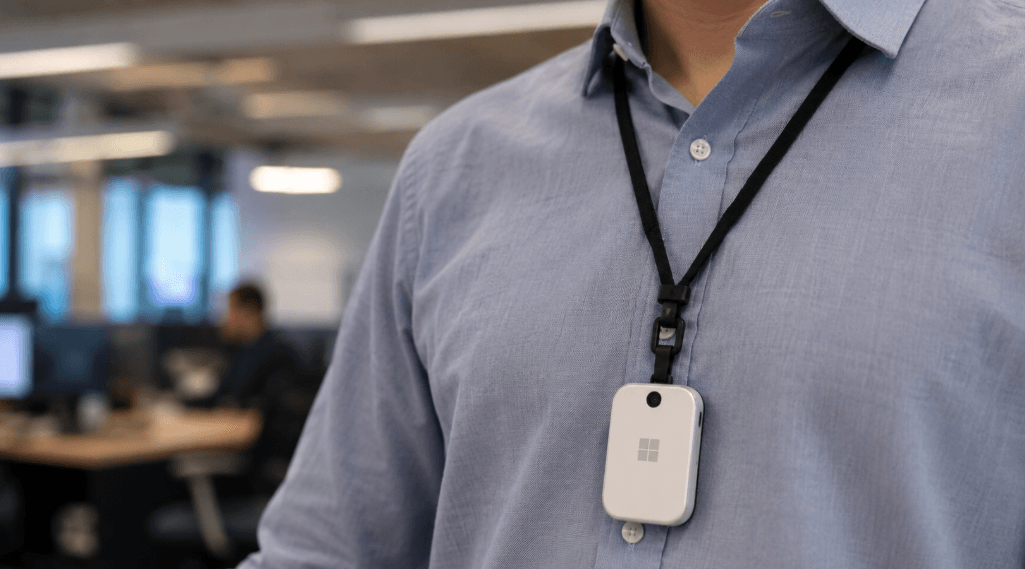
One of the concept products is a compact desktop cube featuring both touch and voice controls. The second is a wearable “access badge” designed to be worn around the neck or attached to a belt loop, allowing users to interact quickly with AI-powered workplace tools while moving around the office.
Steven Bathiche, a Microsoft executive involved in the project, said the devices are intended to support people who regularly use AI agents in their day-to-day work.
According to Microsoft, the ongoing pilot programme will help determine how such hardware “form factors” could evolve into commercial products in the future. The company has not confirmed whether either device will eventually reach the consumer market.
Microsoft chief executive Satya Nadella described the prototypes as representing a “new form factor” for computing devices.
Project Solara Focuses on AI Agent Interaction
The devices form part of what Nadella referred to as “Project Solara”, a broader initiative centred on AI-driven workplace assistance.
Demonstrations shown during the conference featured employees using the badge and desktop device to communicate with AI agents — software systems capable of carrying out tasks with varying levels of autonomy.
Such AI agents are becoming increasingly common across the technology sector, particularly in software development, administration and productivity tasks. Many businesses are already using them to assist with coding, scheduling, document management and research.
The rapid adoption of AI tools has also fuelled wider debate over employment across the technology industry. Several large firms, including Microsoft, have announced job reductions in recent years while simultaneously increasing investment in AI infrastructure and automation.
Wearable Badge Includes Built-In Camera
The wearable badge includes a small integrated camera intended to help AI systems better understand a user’s surroundings.
During a live demonstration, Bathiche activated the badge using fingerprint recognition before instructing it to photograph the audience and send the images back for review. According to the demonstration, the device completed the task successfully.
In a company blog post, Bathiche said the camera allows AI agents “to better understand and help take action on the environment around them”.
The inclusion of cameras on AI-enabled devices is likely to raise familiar privacy questions. Similar concerns have already surrounded products such as Meta’s AI smart glasses, particularly regarding how images and video are recorded, stored and processed.
In the UK, workplace surveillance and data protection rules remain tightly regulated under legislation including the UK GDPR framework, meaning any future commercial rollout of such technology could face scrutiny from regulators and employers alike.
Microsoft Revisits the Wearables Market
This is not Microsoft’s first attempt to establish itself in the wearable technology sector.
The company previously developed the Microsoft HoloLens mixed-reality headset, designed to compete with devices such as Meta Quest and Apple Vision Pro.
HoloLens was once expected to become a major commercial and defence product, including through a multibillion-dollar contract with the US Army. However, after years of development difficulties and testing challenges, Microsoft confirmed in 2024 that production of the headset would end.
Meanwhile, Google is also revisiting wearable technology with renewed efforts around smart glasses, more than a decade after the failure of Google Glass.
AI Hardware Race Continues
Microsoft’s latest prototypes underline how major technology companies are increasingly competing to define the next generation of AI-enabled hardware.
Rather than relying solely on smartphones and PCs, firms are now experimenting with devices designed to provide constant, hands-free access to AI systems throughout the working day.
Whether such products become mainstream office equipment remains uncertain, but the direction of travel suggests AI integration is likely to extend far beyond conventional screens and keyboards in the years ahead.

Edward Langley is a contributor at Mediarunsearch.co.uk, covering a wide range of topics including news, politics, business, technology, sport, entertainment and lifestyle. He focuses on delivering clear, balanced reporting and useful information that helps readers stay informed about current affairs and developing stories. His work highlights issues, trends and events that matter to everyday audiences, with an emphasis on accuracy, relevance and accessible journalism.