
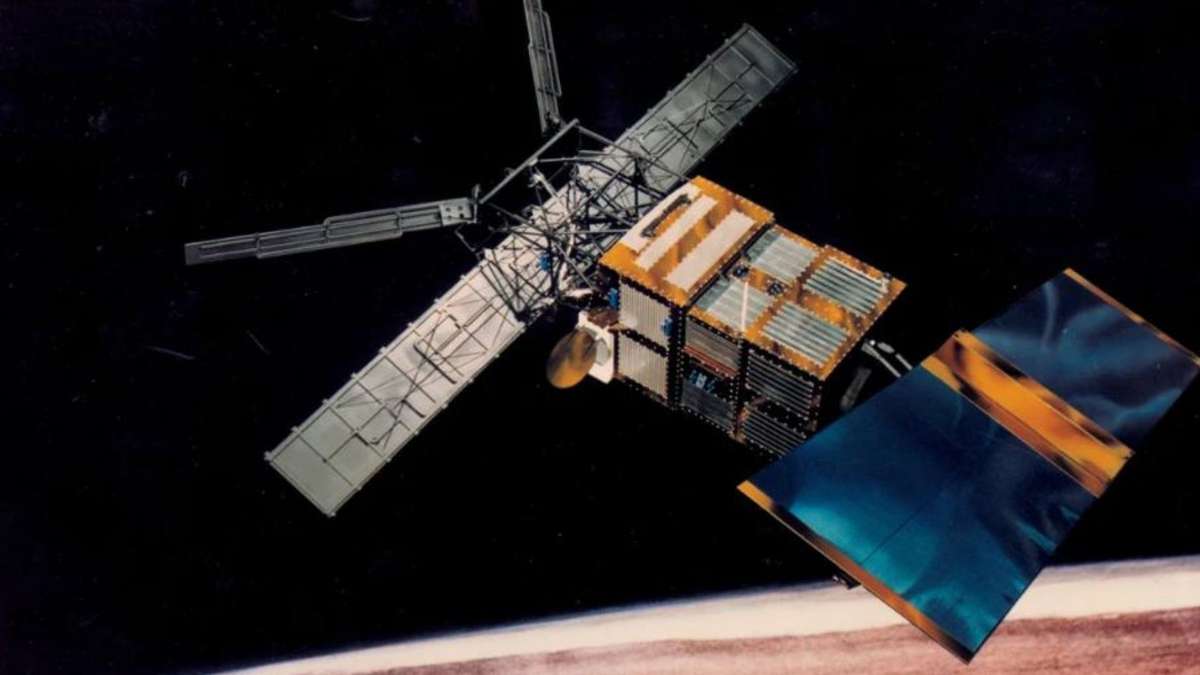
Next Wednesday morning (21), one of the satellites will re-enter the Earth’s atmosphere European Space AgencyWith the expectation that it will disintegrate and burn in the process.
The European Space Agency (ESA), through its Space Debris Office, and in cooperation with an international monitoring network, monitors and tracks the Earth observation satellite, known as IRS-2. This satellite is expected to return to the Earth's atmosphere on the morning of Wednesday 21st of this month, with a margin of error of approximately 15 hours.
ESA provides real-time updates about the event on its portal. However, due to the nature of the satellite's return, and without the possibility of maneuvers, it is impossible to precisely determine the location and moment at which the re-entry and burn-up process will occur, the agency said in a statement.
Thus, the uncertainty about the exact moment of re-entry of the satellite is due to the unpredictability of solar activity, which can affect the density of the Earth's atmosphere and, consequently, the behavior of the satellite with respect to atmospheric gravity. As the Sun approaches the peak of its 11-year cycle, known as solar maximum, an increase in solar activity is expected later this year.
The mass of ERS-2 is estimated at 2294 kg after exhausting fuel. This makes it similar in size to other space debris that reenters Earth's atmosphere.
It is expected that at an altitude of about 80 kilometers above the Earth's surface, the satellite will fragment and some of these fragments will burn up in the atmosphere. The agency indicates that some fragments may reach the surface of the planet, but stresses that they should not contain harmful substances and are likely to fall into the ocean.
first edition
The ERS-2 Earth observation satellite was first launched on April 21, 1995, and represented the pinnacle of technology at the time. Europe developed and launched the satellite, making it the most advanced of its kind.
Along with its counterpart, IRS-1This satellite played a crucial role in collecting precious data. Information has been revealed about the polar ice caps, oceans and land surfaces of our planet. This is in addition to monitoring natural disasters such as floods and earthquakes in remote areas. Even today, the data initially collected by ERS-2 is still useful, the agency said.
In 2011, the agency made the decision to end satellite operations. In the face of growing concern about the accumulation of space debris in Earth's orbit, we have eliminated its presence in Earth's orbit.
From July to August 2011, the satellite performed a total of 66 deorbit maneuvers. These procedures aim to ensure that the satellite is removed from its orbit in a safe and controlled manner. Finally, on September 11 of that year, the mission officially ended successfully.
*The text is under the supervision of Tomaz Bellomini

Edward Langley is a contributor at Mediarunsearch.co.uk, covering a wide range of topics including news, politics, business, technology, sport, entertainment and lifestyle. He focuses on delivering clear, balanced reporting and useful information that helps readers stay informed about current affairs and developing stories. His work highlights issues, trends and events that matter to everyday audiences, with an emphasis on accuracy, relevance and accessible journalism.