
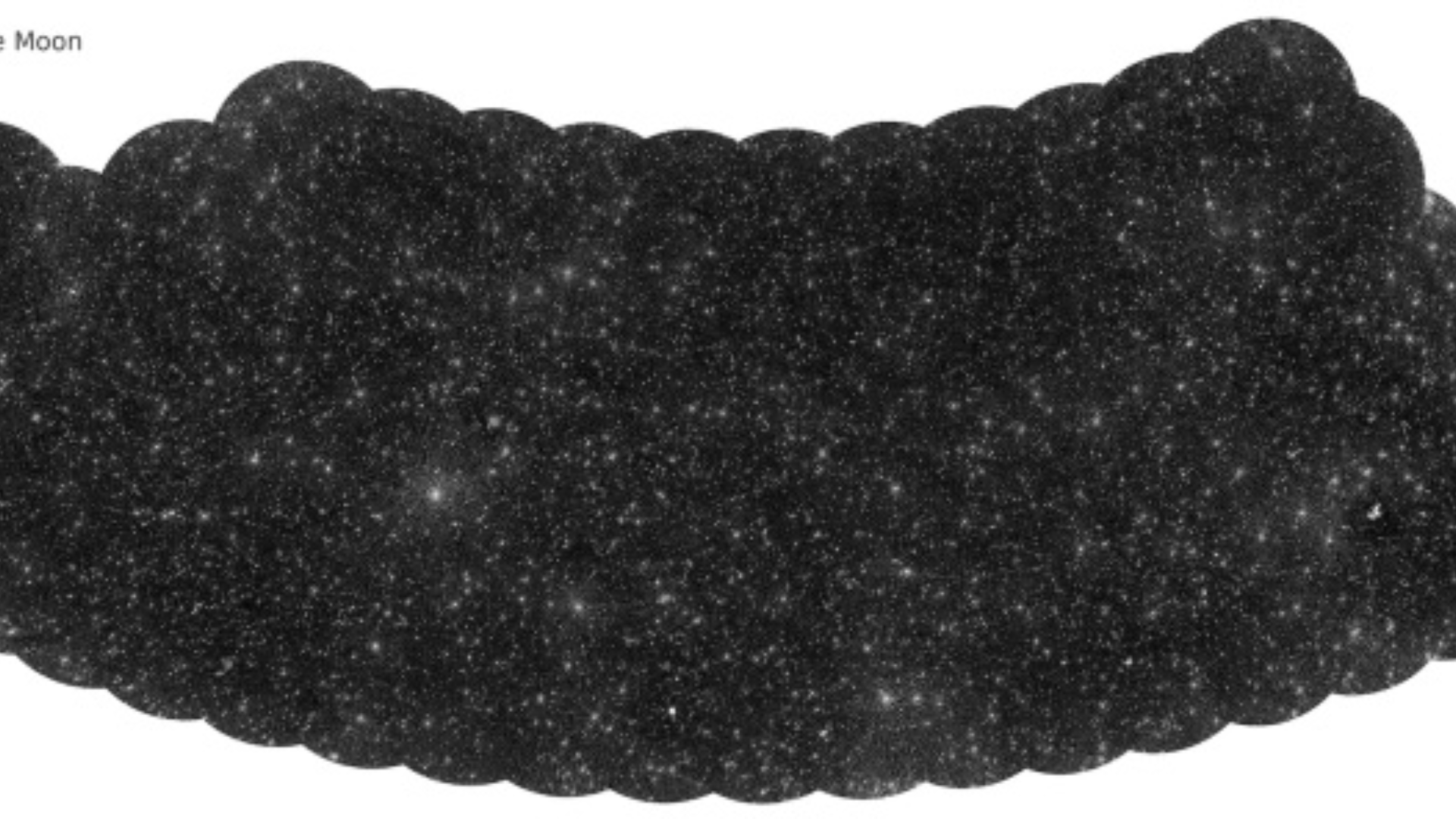
The black hole is a space phenomenon whose discovery was fairly recent, with studies by Albert Einstein on the general theory of relativity. After that, her acting appeared in films, series and games. But will you be able to spot one? Black hole In an image full of bright spots that look like stars?
This is not just a picture of the sky
In the image below, you will notice a black background and stars. However, what could be just a starry night are actually active black holes.
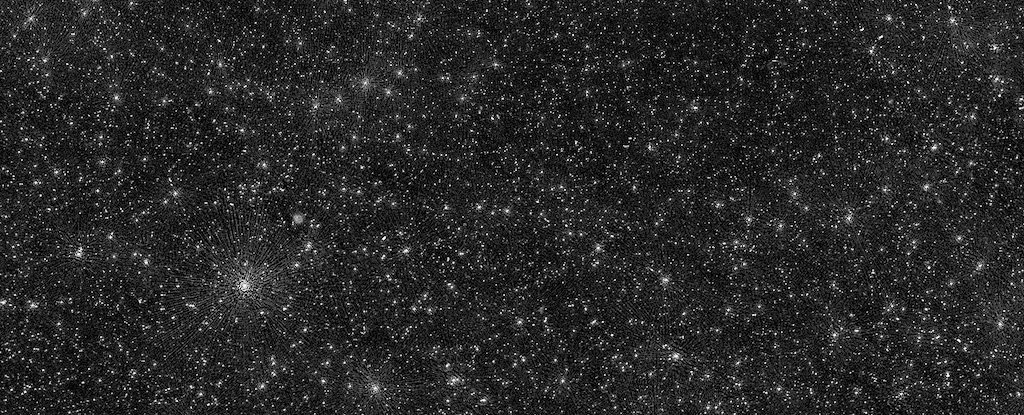
Black holes are active in galaxies located light years away from planet Earth, intensively absorbing matter, from a strong gravitational field that has the ability to absorb light.
The image, which is not recent and was published in 2021, contains about 25,000 points of light, which are, in fact, black holes. Capturing the image required years of joint efforts by astronomers and physicists, according to Francesco De Gasperin of the University of Hamburg in Germany.
How the pictures were taken
To obtain the black hole record, it was necessary to convert the radio signals, at a low frequency, into images representing the sky, says the astronomer from Hamburg.
Black holes are hard to spot when they are not active. However, while it is actively absorbing matter, the gravitational force present is capable of producing radiation of various wavelengths. This is the only way to discover their existence.
In the case of the image above, the black holes were captured with the help of the Low Frequency Array (LOFAR), a network of radio telescopes of about 20,000 antennas spread across Europe.
Unlike other networks, LOFAR is able to acquire images in High accuracy at frequencies less than 100 megahertz (MHz). To correct distortions caused by interference from the atmosphere, which becomes opaque at frequencies below 5 MHz, supercomputers were used.
This development is a leap for the scientific community, which is celebrating: “Having developed the program for so many years, it is amazing to note that it is now working,” says Huub Röttgering, of the Leiden Observatory, located in the Netherlands.

Edward Langley is a contributor at Mediarunsearch.co.uk, covering a wide range of topics including news, politics, business, technology, sport, entertainment and lifestyle. He focuses on delivering clear, balanced reporting and useful information that helps readers stay informed about current affairs and developing stories. His work highlights issues, trends and events that matter to everyday audiences, with an emphasis on accuracy, relevance and accessible journalism.