
World Autism Awareness Day – An open letter to the academic community
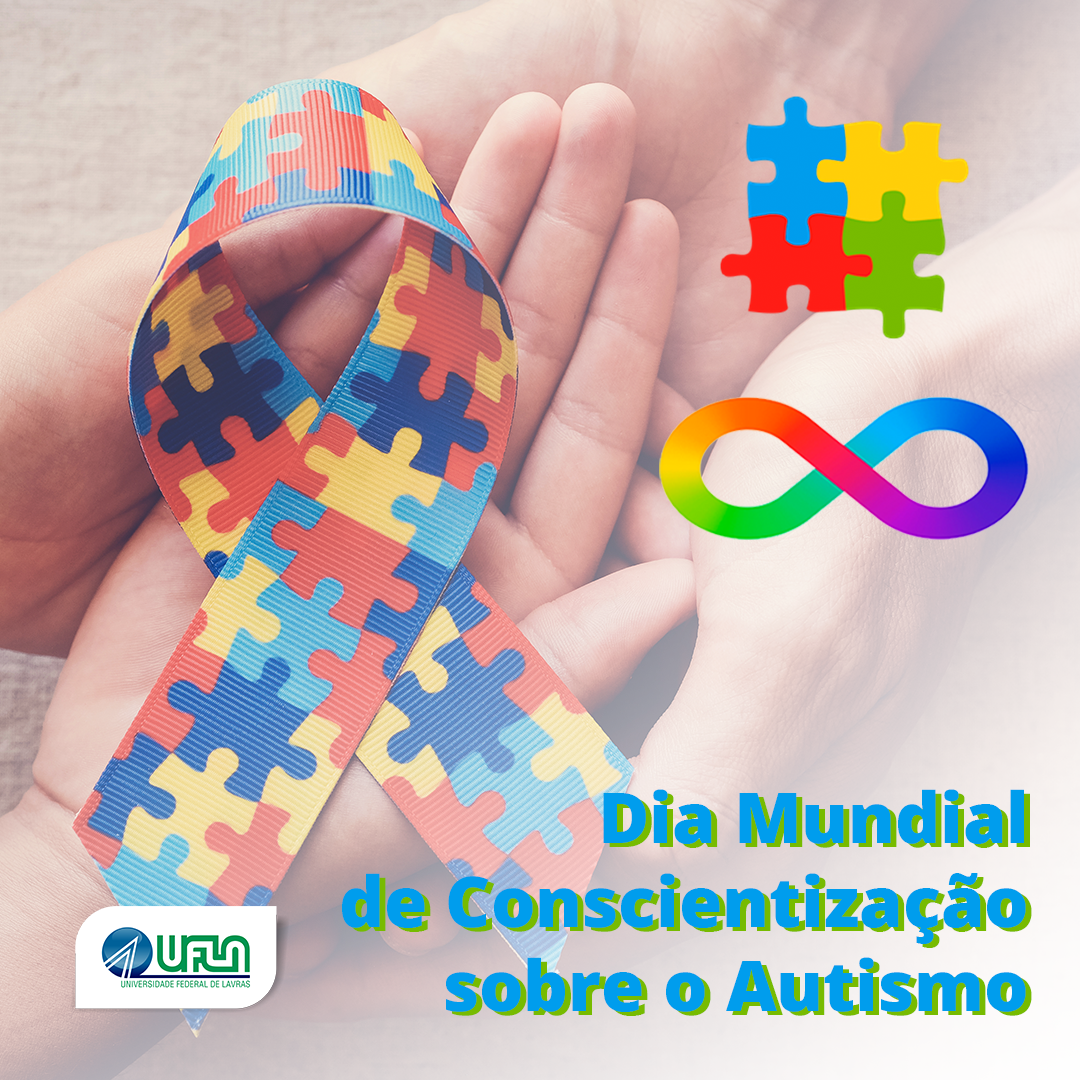
On World Autism Awareness Day – April 2 – the Students with Special Educational Needs Support Program (Padnee / UFLA) team leaves a message to the university community.
Dear academic community,
April 2 was designated by the United Nations in 2007 as World Autism Awareness Day.
We, as a university, have an important role to play in promoting awareness and inclusion of people with autism in our academic community. According to the World Health Organization, autism can be considered a neurodevelopmental disorder that in some cases affects communication, behavior, and social interaction. It is important to stress that today we are talking about three levels of support for people with autism, namely 1, 2, and 3.
We avoid talking about mild, moderate, and severe autism, because the terms don’t explain how each person with autism functions. In some cases, in disorganization, a Level 1 person can move to Level 2 quickly. What is important is to enhance knowledge and enable self-knowledge.
One of the symbols of autism is the colorful “puzzle piece”, which represents the complexity and diversity of autism. It was created in 1963 by the UK’s National Autistic Society to reflect the case in which neurotypical (non-autistic) people understand autism, as something mysterious, and the idea that autism is a mystery to be solved. In a similar sense, the blue color denoting autism comes from an error arising from the first research on the subject, which suggested that autism was practically a condition restricted to men. The puzzle piece has become widely known as a symbol of awareness and solidarity with autistic people around the world.
The bow (with puzzle piece design) is a popular symbol used in awareness campaigns. It is easy to recognize and remember, and its use in events, campaigns, and promotional materials can help raise awareness of autism and the importance of supporting people with autism and their families.
The infinity symbol is another image that has been linked to autism. It generally represents the whole spectrum of neurological conditions, such as attention deficit hyperactivity disorder (ADHD), oppositional defiant disorder (ODD), and autism, among others. It is often used as an alternate representation of “puzzle piece” and symbolizes the idea that autism is a complex, diverse, lifelong condition, in that it is not a disease or comorbidity, but a condition of neurodiversity. The infinity symbol is a more positive and inclusive alternative to the “puzzle piece”, which some people may see as perpetuating negative stereotypes and a misguided view of autism. This is because the autistic person is not “disengaged,” they are not in a mystery. She is a complete and complete being.
However, it is important to note that not all autistic people identify with the infinity symbol or any other symbol in particular. The most important thing is to listen and respect the views and opinions of people with autism, and work together to create a more inclusive and understanding society.
We would like to encourage you to learn more about autism so that we can do our duty to implement the motto “University for All”.
Let us take this opportunity to reinforce the challenge and commitment to inclusion and respect for differences in our university.
with respect ,
Support Program Team for Students with Specific Educational Needs
Bad me
Want to know more about PADNEE, visit the website: https://praec.ufla.br/servicos-em-destaque/padnee
