
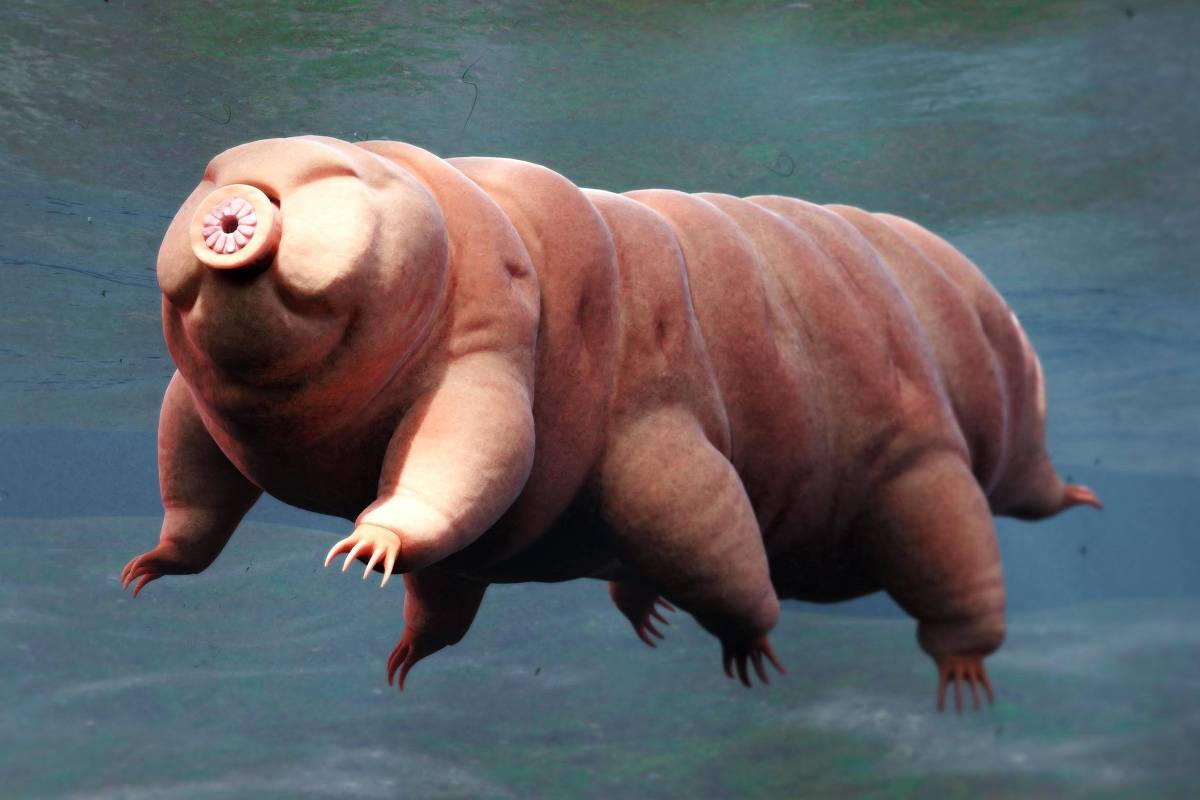
With their stocky, surreal appearance, tardigrades have intrigued researchers for years.
This eight-legged animal, which is only a millimeter long, can be found in almost all habitats in the world and has an unprecedented ability to survive in the most extreme situations.
Neither lack of oxygen or water, nor scorching or freezing temperatures, nor radiation from space affect the so-called water bears.
They survive these conditions by entering a deep state of suspended animation.
This ability allowed them to live on Earth for at least 600 million years, and they succeeded in overcoming the five mass extinction events that the planet witnessed.
But how do they do it?
As a team of researchers has discovered, the main mechanism contributing to their resistance is a type of molecular switch that initiates a state of suspended animation.
This molecular sensor detects harmful conditions in the environment and tells invertebrates when to enter a state of dormancy and when they can resume normal life.
Hey Stady – Led by researchers Derek R. J. Collinge, of Marshall University, and Leslie M. Hicks, from the University of North Carolina at Chapel Hill, US – and was published in the journal PLOS ONE.
Experience
To understand the mechanism, the researchers exposed the water bear, also known by the affectionate nickname for moss warthog, to freezing temperatures and high levels of hydrogen peroxide, salt and sugar.
In response to these extreme conditions, animal cells produce highly reactive harmful molecules called free radicals.
Hicks told New Scientist that the free radicals quickly reacted with other molecules.
Thus, they discovered that free radicals oxidize an amino acid called cysteine, which is one of the basic components of proteins in the body.
These interactions cause proteins to change their structure and function, and this sends a signal to initiate dormancy.
In experiments in which the researchers used chemicals to block cysteine, the water bears were unable to detect free radicals and thus were unable to enter dormancy.
“Cysteine acts as a kind of regulatory sensor,” Hicks says. “This allows tardigrades to sense their surroundings and respond to stress.”
When external conditions improved, they discovered that cysteine was no longer oxidized. This gave the tardigrades the green light to wake up from their immobilized state.
The research result shows that cysteine oxidation is a vital regulatory mechanism that contributes to the remarkable resilience of water bears and helps them survive in constantly changing environments.
The researchers hope that long-term research will help better understand the aging process, as well as the effect of space travel on the body, as both are affected by free radical damage to vital cellular machinery such as DNA and proteins. .
