
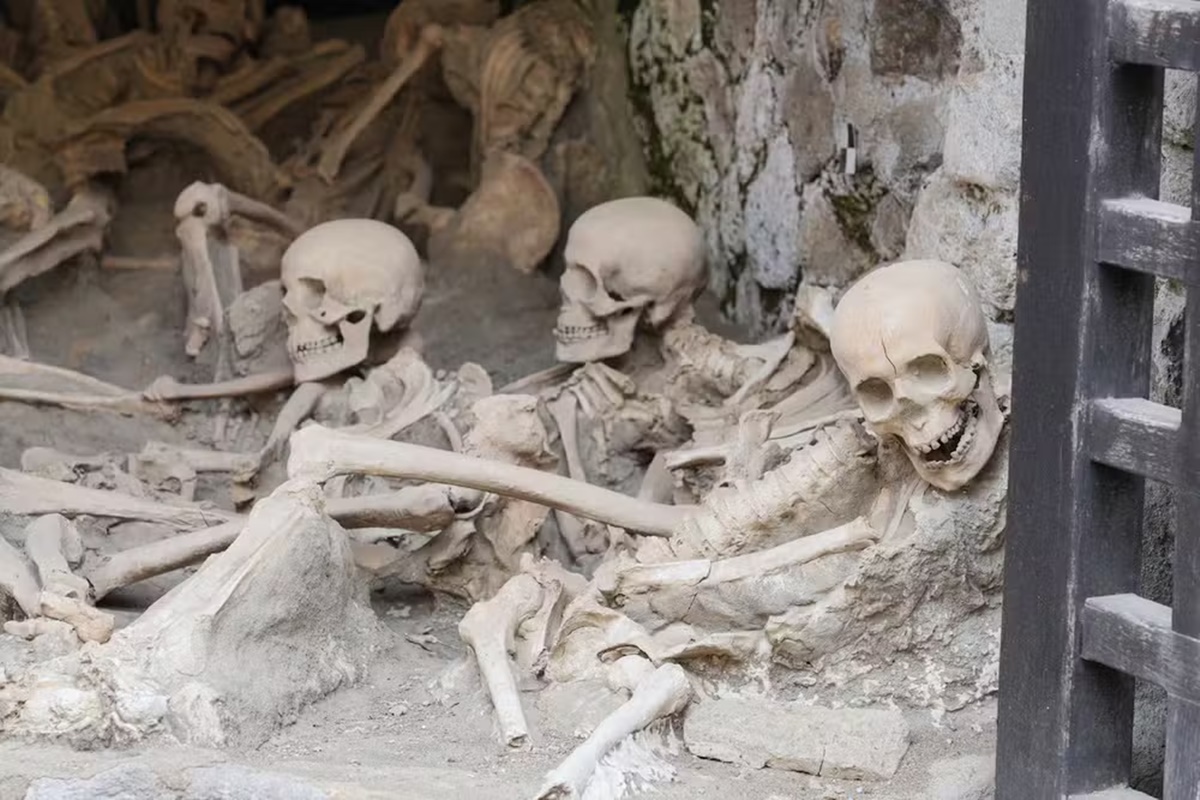
The beach in Herculaneum, Italy, was opened to visitors after two thousand years. It was there where about 330 people were waiting for rescue that never arrived, during the eruption of Mount Vesuvius. The beach area is famous for the remains of dwellings.
Vesuvius erupted in 79 AD, burying the beach and leaving the beach inaccessible to visitors. Now, with restoration work recently completed, visitors can return to the site and see what the place looked like before the disaster 2,000 years later.
The beach previously had black volcanic sand, but authorities decided not to use it for reconstruction, because the material would create accessibility problems for wheelchair users. On site, they used a dark black element to recreate the environment before the Vesuvius disaster.
Herculaneum had a population of about 5,000 and, like Pompeii, was destroyed by lava from Vesuvius, which left a layer of ash 15 meters high.
In 2021, archaeologists found the remains of a man between 40 and 45 years old along with his belongings. He was nicknamed “the last fugitive from Herculaneum.” Italian researchers said the heat from the eruption was so strong that it turned the victim's brain into glass.
date
The eruption of Vesuvius in 79 AD was one of the most famous and catastrophic volcanic eruptions of all time. The Roman regions surrounding Pompeii, Herculaneum, Stabia and Apollontis were affected, with Pompeii and Herculaneum being completely destroyed.
Vesuvius spread a deadly cloud of rocks, ash and smoke to a height of more than 30 kilometers, spewing lava and pumice at a rate of 1.5 million tons per second, and releasing thermal energy hundreds of thousands of times greater than the total bombing of Hiroshima.
It is estimated that 16,000 citizens of Pompeii and Herculaneum died from hydrothermal lava flows at temperatures exceeding 700°C. Since 1860, when systematic excavations began at Pompeii, archaeologists have discovered the fossilized shells of the decomposing bodies of more than 1,000 victims within the city limits.

Oliver Ashford is a contributor to Mediarunsearch.co.uk, covering a broad range of topics including news, politics, business, technology, sport, entertainment and lifestyle. He focuses on delivering clear, balanced reporting that helps readers stay informed about current affairs and developments that matter. With an emphasis on accuracy, relevance and accessibility, Oliver aims to present useful information and engaging stories in a straightforward manner, making complex topics easier for readers to understand and follow.